



Enter your VAT number here and click Verify:
Your details have been verified. VAT number registered to:
,
.
Your order will now be zero rated for VAT purposes. We reserve the right to verify these details after your order request has been made and reinstate VAT if required.
Your VAT details were not recognised or were invalid. Your VAT number must be matched to your Billing Country as specified above. This is currently specified as . You do not need to enter the country code part of your VAT number as this has already been selected in your billing address details above.
The VAT number checking service is currently offline. Please supply your VAT details within the comments or special instructions field below and we will apply a VAT discount after placing your order request.
ECU Re-Mapping DIY
By OE Match


- Porsche 911 1987-1989 3.2L G50
OE Match 24-Pin Performance Upgrade Chip – USA/Canada Specification – Premuffler / Cat Bypass Configuration
Transform the performance of your 1987 USA/Canada specification Porsche 911 Carrera 3.2 with the OE Match 24-Pin Performance Upgrade Chip, specifically developed for 930/21 and 930/25 catalyst engines fitted with a premuffler or catalytic converter bypass pipe, while retaining either the factory rear silencer or a sports muffler.
Fits:
- Porsche 911 1987 3.2L G50
Replacing the restrictive catalytic converter allows the 3.2-litre flat-six to breathe more efficiently, but without optimising the Bosch Motronic ECU, much of the potential performance gain is left untapped. This OE Match calibration has been developed specifically for freer-flowing exhaust systems, delivering stronger torque, sharper throttle response and smoother power delivery throughout the rev range.
Planning your exhaust upgrade? This chip can be installed now on a standard catalyst-equipped car, allowing you to enjoy its drivability improvements immediately before fitting a premuffler or cat bypass at a later date.
Developed for Real-World Performance
Unlike generic replacement chips, every OE Match Performance Chip has been developed from a completely new calibration. Hundreds of hours of software development, road evaluation and dyno testing across more than one hundred Carrera 3.2 models have produced a calibration that transforms the way the car drives.
Exclusive OE Match programming delivers:
- Smoother idle with virtually no idle hunting
- Increased low and mid-range torque
- Sharper throttle response
- Elimination of the factory flat spot below 4,000 rpm
- Reduced RPM dipping during deceleration
- Reduced overrun backfiring
- Strong pulling power from just 1,500 rpm
- Dyno-proven horsepower and torque gains throughout the rev range
The result is a Carrera that feels noticeably lighter, more responsive and considerably more enjoyable to drive. Many owners describe the improvement as feeling like the car has shed 500-600 pounds in weight.
Many customers also report 10-15% improvements in highway fuel economy, thanks to improved part-throttle efficiency.
1987 Model Year – 24-Pin or 28-Pin?
1987 was a transition year, with Porsche changing from a 24-pin EPROM to a 28-pin version during production.
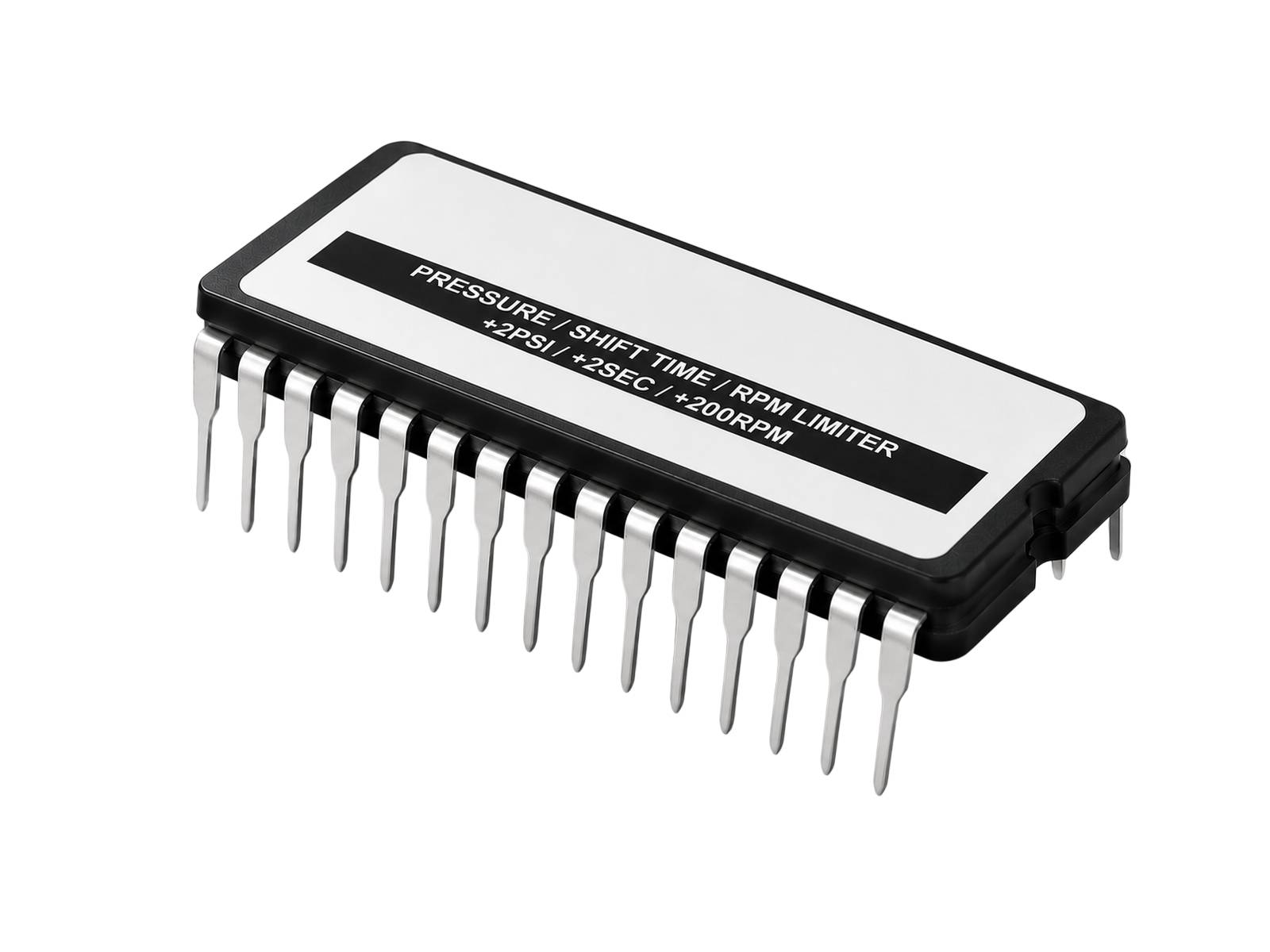
The only reliable way to determine which chip your vehicle requires is to remove the DME control unit and count the number of pins on the original EPROM. The factory chip is a black rectangular unit fitted with a silver foil label displaying a number similar to 1267355xxx.
If your DME contains a 24-pin EPROM, this is the correct OE Match Performance Chip. If your vehicle has a 28-pin chip, please select the dedicated OE Match 28-pin version.
Why Choose OE Match?
This is not a "one-size-fits-all" performance chip. OE Match calibrations are engineered specifically for individual Porsche engine and exhaust configurations, ensuring the Bosch Motronic system delivers maximum performance while maintaining smooth drivability and factory-level reliability.
Benefits
- Increased horsepower and torque
- Sharper throttle response
- Eliminates the factory low-RPM hesitation
- Improved acceleration throughout the rev range
- Smoother idle and reduced deceleration backfiring
- Better everyday drivability
- Potential improvements in fuel economy
- Maximises the benefits of a premuffler or cat bypass exhaust
Porsche 911 Carrera 3.2 Premuffler & Cat Bypass Performance Chips
A premuffler or catalytic converter bypass is one of the most popular upgrades for the Porsche 911 3.2 Carrera, improving exhaust flow and allowing the flat-six engine to perform more efficiently. However, to unlock the full benefit of these modifications, the Bosch Motronic engine management should be recalibrated to match the improved exhaust characteristics.
OE Match Performance Chips are developed specifically for USA and Canada specification Carrera models, with calibrations tailored to standard, premuffler and cat bypass exhaust configurations. Every chip is designed to improve torque, throttle response, drivability and overall engine performance while maintaining the reliability expected from an air-cooled Porsche.
- Porsche 911 1987-1989 3.2L G50
OE Match 24-Pin Performance Upgrade Chip – USA/Canada Specification SSI or Performance Headers
Take your 1987 USA/Canada specification Porsche 911 Carrera 3.2 to the next level with the OE Match 24-Pin Performance Upgrade Chip, developed specifically for 930/21 and 930/25 catalyst engines converted to SSI heat exchangers or performance headers, while retaining either the factory rear silencer or a sports muffler.
Fits:
- Porsche 911 1987 3.2L G50
Upgrading to SSI heat exchangers or performance headers
dramatically improves exhaust flow, but to achieve the maximum performance
benefit, the Bosch Motronic engine management must be recalibrated. The OE
Match Performance Chip has been engineered specifically for this exhaust
configuration, optimising ignition timing and fuel delivery to deliver stronger
performance, sharper throttle response and exceptional drivability.
Unlock the Full Potential of Your Carrera
This is far more than a generic replacement EPROM. Every OE Match Performance Chip has been developed from a completely new calibration following hundreds of hours of software development, road evaluation and dyno testing on more than one hundred Carrera 3.2 models.
Exclusive OE Match programming delivers:
- Smoother idle with virtually no idle hunting
- Increased low and mid-range torque
- Sharper throttle response
- Elimination of the factory flat spot below 4,000 rpm
- Reduced RPM dipping during deceleration
- Reduced overrun backfiring
- Strong pulling power from just 1,500 rpm
- Dyno-proven horsepower and torque gains throughout the rev range
The difference is immediately noticeable. The engine becomes more responsive, accelerates harder throughout the rev range and delivers a far more engaging driving experience. Many owners describe the transformation as making the car feel 500-600 pounds lighter.
Many customers also report 10-15% improvements in highway fuel economy, thanks to more efficient part-throttle mapping.
1987 Model Year – 24-Pin or 28-Pin?
1987 was a transitional production year, with Porsche changing from a 24-pin EPROM to a 28-pin version during production.
The only reliable way to determine which chip your vehicle requires is to remove the DME control unit and count the pins on the original EPROM. The factory chip is a black rectangular unit fitted with a silver foil identification label displaying a number similar to 1267355xxx.
If your DME contains a 24-pin EPROM, this is the correct OE Match Performance Chip. If your vehicle has a 28-pin chip, please select the dedicated OE Match 28-pin version.
Why Choose OE Match?
OE Match chips are not "one-size-fits-all" calibrations. Each program has been individually developed to suit specific Porsche engine and exhaust combinations, ensuring optimum performance from every configuration.
Extensive research, continual code refinement and comprehensive dyno testing have produced a calibration that delivers outstanding throttle response, stronger torque, improved drivability and reliable performance.
Porsche 911 3.2 Carrera Performance Chips for SSI & Performance Headers
SSI heat exchangers and performance headers are among the most effective upgrades for improving the breathing and performance of the Porsche 911 3.2 Carrera. To fully capitalise on the increased exhaust flow, the Bosch Motronic engine management should be recalibrated with software designed specifically for these modifications.
OE Match Performance Chips are developed exclusively for USA and Canada specification Carrera models equipped with SSI or performance header conversions. Every calibration is tailored to deliver stronger torque, faster throttle response, smoother power delivery and improved drivability while maintaining the reliability and character of Porsche's iconic air-cooled flat-six.
- Porsche 911 1987-1989 3.2L G50
OE Match 24-Pin Performance Upgrade Chip – USA/Canada Specification
Unlock the full potential of your 1987 USA/Canada
specification Porsche 911 Carrera 3.2 with the OE Match 24-Pin Performance
Upgrade Chip. Designed specifically for 930/21 and 930/25 catalyst engines
in standard configuration with the factory catalytic converter and either the
original or sports rear silencer, this upgrade transforms the performance and
drivability of your air-cooled 911.
Fits:
- Porsche 911 1987 3.2L G50
Developed through hundreds of hours of road and dyno testing on over one hundred Carrera 3.2 models, this is far more than a generic replacement chip. Starting with a completely new calibration, the ignition and fuel maps have been extensively re-engineered to deliver stronger performance throughout the rev range while maintaining factory reliability.
More Than Just Peak Power
- The OE Match chip improves every aspect of the driving experience by delivering:
- Smoother idle and virtually eliminating idle hunting
- Stronger low and mid-range torque
- Sharper throttle response
- Removal of the factory flat spot below 4,000 rpm
- Reduced deceleration backfiring and RPM dipping
- Increased pulling power from as little as 1,500 rpm
- Dyno-proven horsepower and torque gains throughout the rev range
The result is a Carrera that feels noticeably lighter, more responsive and considerably more enjoyable to drive, whether on the road or at your next autocross event.
Many owners also report improvements of 10-15% in highway fuel economy, thanks to improved part-throttle efficiency.
Designed Specifically for Your Car
Unlike generic "one-size-fits-all" chips, the OE Match Performance Chip uses proprietary software developed exclusively for the Porsche 3.2 Carrera. Extensive coding revisions and real-world testing have produced performance unavailable from conventional Motronic upgrades.
Every calibration is designed to maximise the performance of your individual engine specification while maintaining safe operating parameters.
Is Your 1987 Carrera a 24-Pin or 28-Pin Car?
The 1987 model year was a transition period, with Porsche changing from a 24-pin DME chip to a 28-pin version during production.
The only reliable way to identify which chip your car requires is to remove the DME control unit and count the number of pins on the existing chip. The original chip is a black rectangular EPROM fitted with a silver factory foil label displaying a number similar to 1267355xxx.
If your DME contains a 24-pin EPROM, this is the
correct upgrade chip for your vehicle.
If your car has a 28-pin chip, you'll
require the corresponding 28-pin OE Match version instead.
Features
- Designed for 1987 USA & Canada Porsche 911 Carrera 3.2
- Fits 930/21 and 930/25 catalyst engines
- 24-pin Bosch Motronic DME chip
- Suitable for factory catalytic converter
- Compatible with standard or sports rear silencers
- Proprietary ignition and fuel mapping
- Improved idle stability
- Increased torque and throttle response
- Dyno-tested and road-developed
Benefits
- Improved everyday drivability
- Stronger acceleration throughout the rev range
- Eliminates the low-RPM hesitation
- Faster throttle response
- Smoother idle quality
- Increased engine flexibility
- Potential fuel economy improvements
- One
of the most cost-effective performance upgrades available for the Carrera
3.2
Porsche 911 Carrera 3.2 Performance Chips
The Bosch Motronic ECU fitted to the Porsche 911 Carrera 3.2 responds exceptionally well to professional recalibration. OE Match Performance Chips optimise ignition timing and fuel delivery to improve throttle response, torque, drivability and overall engine performance without compromising reliability.
Whether your Carrera is completely standard or fitted with a sports rear silencer, Design911 offers model-specific performance chips developed for USA, Canada, ROW and European specification vehicles, ensuring every engine receives the correct calibration.
- Porsche 911 1987-1989 3.2L G50
OE Match 28-Pin Performance Upgrade Chip – USA/Canada Specification Premuffler / Cat Bypass Configuration
Take full advantage of your 1987-1989 USA/Canada specification Porsche 911 Carrera 3.2 with the OE Match 28-Pin Performance Upgrade Chip, engineered specifically for 930/21 and 930/25 catalyst engines fitted with a premuffler or catalytic converter bypass pipe, while retaining either the factory rear silencer or a sports muffler.
Fits:
- Porsche 911 1987-1989 3.2L G50
Removing the restrictive catalytic converter significantly
improves exhaust flow, but without recalibrating the Bosch Motronic ECU, the
engine cannot fully benefit from the modification. This OE Match Performance
Chip has been developed specifically for freer-flowing exhaust systems,
optimising ignition timing and fuel delivery to maximise horsepower, torque and
throttle response while maintaining excellent reliability.
1987 Model Year – 24-Pin or 28-Pin?
1987 was a transition year, with Porsche changing from a 24-pin EPROM to a 28-pin version during production.
The only reliable way to determine which chip your vehicle requires is to remove the DME control unit and count the number of pins on the original EPROM. The factory chip is a black rectangular unit fitted with a silver foil label displaying a number similar to 1267355xxx.
If your DME contains a 24-pin EPROM, this is the correct OE Match Performance Chip. If your vehicle has a 28-pin chip, please select the dedicated OE Match 28-pin version.
Planning to fit a premuffler or cat bypass in the future? This chip can be installed on a standard catalyst-equipped car today, allowing you to enjoy immediate improvements in drivability and performance before upgrading your exhaust at a later date.
Engineered for Real Performance
Unlike generic replacement chips, the OE Match Performance Chip has been developed from a completely new calibration. Hundreds of hours of software development, road testing and dyno evaluation on more than one hundred Carrera 3.2 models have produced a calibration that transforms the way your Porsche drives.
Exclusive programming provides:
- Smoother idle with virtually no idle hunting
- Increased low and mid-range torque
- Sharper throttle response
- Elimination of the factory flat spot below 4,000 rpm
- Reduced deceleration backfiring and RPM dipping
- Stronger pulling power from just 1,500 rpm
- Dyno-proven horsepower and torque gains throughout the rev range
The result is a Carrera that feels significantly more responsive, delivering stronger acceleration and improved flexibility in everyday driving. Many owners describe the transformation as making the car feel 500-600 pounds lighter.
Many customers also report 10-15% improvements in highway fuel economy, thanks to improved part-throttle efficiency.
Why Choose OE Match?
This is not a generic "one-size-fits-all" performance chip. Every OE Match calibration is developed specifically for individual Porsche engine and exhaust configurations, ensuring the Bosch Motronic engine management is perfectly matched to your vehicle.
Extensive research, coding revisions and real-world testing have produced a calibration that delivers outstanding drivability, stronger performance and factory-like refinement.
Benefits
- Increased horsepower and torque
- Faster throttle response
- Eliminates the factory low-RPM hesitation
- Improved mid-range acceleration
- Smoother idle quality
- Reduced deceleration backfiring
- Better everyday drivability
- Potential improvements in fuel economy
- Maximises the performance benefits of a premuffler or cat bypass exhaust
Porsche 911 3.2 Carrera Premuffler & Cat Bypass Performance Chips
A premuffler or catalytic converter bypass is one of the
most effective upgrades for improving exhaust flow on the Porsche 911 3.2 Carrera.
To realise the full benefit of these modifications, the Bosch Motronic ECU
should be recalibrated to match the reduced exhaust restriction.
OE Match Performance Chips are developed specifically for USA and Canada
specification Carrera models, with calibrations tailored for standard,
premuffler and cat bypass exhaust configurations. Every chip is engineered to
improve torque, throttle response, drivability and overall engine performance
while maintaining the reliability expected from an air-cooled Porsche.
- Porsche 911 1987-1989 3.2L G50
OE Match 28-Pin Performance Upgrade Chip – USA/Canada Specification SSI or Performance Headers
Unleash the full performance potential of your 1987-1989 USA/Canada specification Porsche 911 Carrera 3.2 with the OE Match 28-Pin Performance Upgrade Chip, engineered specifically for 930/21 and 930/25 catalyst engines fitted with SSI heat exchangers or performance headers, while retaining either the factory rear silencer or a sports muffler.
Fits:
- Porsche 911 1987-1989 3.2L G50
SSI heat exchangers and performance headers dramatically improve exhaust scavenging and engine breathing, allowing the legendary 3.2-litre flat-six to produce more usable power throughout the rev range. To fully exploit these modifications, the Bosch Motronic ECU requires a calibration specifically written for the increased exhaust flow. The OE Match Performance Chip has been developed precisely for this purpose, delivering sharper performance without compromising reliability or drivability.
1987 Model Year – 24-Pin or 28-Pin?
1987 was a transition year, with Porsche changing from a 24-pin EPROM to a 28-pin version during production.
The only reliable way to determine which chip your vehicle requires is to remove the DME control unit and count the number of pins on the original EPROM. The factory chip is a black rectangular unit fitted with a silver foil label displaying a number similar to 1267355xxx.
If your DME contains a 24-pin EPROM, this is the correct OE Match Performance Chip. If your vehicle has a 28-pin chip, please select the dedicated OE Match 28-pin version.
Developed to Transform the 3.2 Carrera
This is far more than a generic replacement EPROM. Every OE Match Performance Chip has been written from the ground up following hundreds of hours of software development, road testing and dyno evaluation across more than one hundred Porsche 3.2 Carrera models.
Exclusive OE Match programming delivers:
- Smoother idle with virtually no idle hunting
- Increased low and mid-range torque
- Sharper throttle response
- Elimination of the factory flat spot below 4,000 rpm
- Reduced RPM dipping during deceleration
- Reduced overrun backfiring
- Stronger pulling power from just 1,500 rpm
- Dyno-proven horsepower and torque gains throughout the rev range
The result is a Carrera that feels lighter, more responsive and considerably quicker in everyday driving. Many owners describe the improvement as making the car feel as though it has lost 500-600 pounds, with stronger acceleration and improved flexibility in every gear.
Many customers also report 10-15% improvements in highway fuel economy, thanks to the refined part-throttle fuel and ignition mapping.
Optimised for SSI & Performance Header Conversions
This calibration has been specifically engineered for:
- 1987-1989 USA & Canada Porsche 911 Carrera 3.2
- Engine
codes 930/21 and 930/25
- 28-pin Bosch Motronic DME
- SSI heat exchangers
- Performance header exhaust systems
- Standard or sports rear silencers
By recalibrating the Bosch Motronic engine management to suit the improved exhaust flow, the engine develops stronger torque across the rev range while maintaining smooth idle quality, refined drivability and factory-level reliability.
Why Choose OE Match?
Unlike generic performance chips, OE Match calibrations are individually developed for specific Porsche engine and exhaust combinations. Extensive research, continual software refinement and comprehensive dyno testing have produced a calibration that consistently outperforms conventional replacement chips.
With a wide range of bespoke calibrations available for different engine specifications and exhaust configurations, every Carrera receives software tailored to its exact setup.
Porsche 911 3.2 Carrera Performance Chips for SSI & Performance Headers
SSI heat exchangers and performance headers are among the most popular upgrades for the Porsche 9113.2 Carrera, improving exhaust scavenging and allowing the air-cooled flat-six engine to breathe more efficiently. To maximise these benefits, the Bosch Motronic ECU should be recalibrated with software specifically designed for this exhaust configuration.
OE Match Performance Chips are developed exclusively for USA and Canada specification Carrera models equipped with SSI heat exchangers or performance headers. Every calibration is tailored to optimise torque, throttle response, drivability and overall engine performance while preserving the reliability and character that make the Carrera 3.2 one of Porsche's most rewarding air-cooled models.
- Porsche 911 1987-1989 3.2L G50
OE Match 28-Pin Performance Upgrade Chip – USA/Canada Specification
Unlock the full performance potential of your 1987-1989
USA/Canada specification Porsche 911 Carrera 3.2 with the OE Match 28-Pin
Performance Upgrade Chip. Developed specifically for 930/21 and 930/25
catalyst-equipped engines in standard configuration with the factory
catalytic converter and either the original or a sports rear silencer, this
precision-engineered ECU upgrade delivers noticeably sharper performance while
maintaining factory reliability.
Fits:
- Porsche 911 1987-1989 3.2L G50
Unlike generic replacement chips, the OE Match Performance Chip has been developed from a completely new calibration. Hundreds of hours of coding, road evaluation and dyno testing on over one hundred Carrera 3.2 models have produced a refined ignition and fuel map that unlocks performance hidden within the Bosch Motronic system.
Transform the Way Your Carrera Drives
The improvements extend far beyond peak horsepower.
Proprietary software algorithms—exclusive to OE Match—have been developed to
improve every aspect of the driving experience by delivering:
The result is a Carrera that feels significantly more responsive and eager throughout the rev range, with many owners describing the transformation as feeling like the car has shed 500-600 pounds in weight.
Many customers also report 10-15% improvements in highway fuel economy, thanks to improved part-throttle efficiency.
Engineered for Standard USA & Canada Specification Cars
This chip has been specifically calibrated for:
- 1987-1989 Porsche 911 Carrera 3.2 USA & Canada specification
- Engine
codes 930/21 and 930/25
- Standard engine configuration
- Factory catalytic converter
- Standard or sports rear silencer
- Bosch Motronic DME with 28-pin EPROM
Every calibration has been developed to maximise performance while maintaining smooth drivability, reliability and safe engine operation.
Is Your 1987 Carrera a 24-Pin or 28-Pin Car?
1987 was a transitional production year, with Porsche changing from a 24-pin DME EPROM to a newer 28-pin version during production.
If you own a 1987 Carrera, the only reliable way to identify which chip your car requires is to remove the DME control unit and count the number of pins on the original EPROM. The factory chip is a black rectangular unit fitted with a silver foil label displaying a part number similar to 1267355xxx.
If your DME contains a 28-pin EPROM, this is the correct upgrade chip. If it has a 24-pin chip, you'll require the dedicated OE Match 24-pin version instead.
Why Choose OE Match?
This is not a "one-size-fits-all" performance chip. Every OE Match calibration has been developed through extensive coding, dyno testing and real-world driving to optimise ignition timing and fuel delivery for individual Porsche engine configurations.
The result is stronger acceleration, improved drivability, enhanced throttle response and measurable performance gains—all while retaining the refinement and reliability expected from an air-cooled Porsche.
Features
- Designed for 1987-1989 USA & Canada Porsche 911 Carrera 3.2
- Fits 930/21 and 930/25 catalyst engines
- 28-pin Bosch Motronic DME chip
- Suitable for standard engine configuration
- Compatible with factory catalytic converter
- Works with standard or sports rear silencers
- Proprietary ignition and fuel mapping
- Dyno-developed and road-tested
- Improved idle stability and throttle response 100% satisfaction guarantee
Benefits
- Improved everyday drivability
- Increased low and mid-range torque
- Faster throttle response
- Eliminates the factory low-RPM hesitation
- Smoother idle quality
- Stronger acceleration throughout the rev range
- Potential fuel economy improvements
- One of the most cost-effective performance upgrades for the Carrera 3.2
Porsche 911 Carrera 3.2 Performance Chips & Bosch Motronic Upgrades
The Bosch Motronic engine management system fitted to the Porsche 911 Carrera 3.2 offers significant untapped performance when professionally recalibrated. OE Match Performance Chips optimise ignition timing and fuel delivery to improve torque, throttle response, drivability and overall engine performance without compromising long-term reliability.
Model-specific OE Match Performance Chips for USA, Canada, ROW and European specification Carrera 3.2 models, ensuring every engine receives the correct calibration for its specification and exhaust configuration.
Whether your goal is stronger road performance, improved throttle response or a more engaging driving experience, an OE Match Performance Chip is one of the simplest and most effective upgrades available for the air-cooled Porsche 911
- Porsche 911 1987-1989 3.2L G50
Performance Upgrade Chip – 24-Pin Chip with Standard or Sport Rear Silencer
Transform the performance and drivability of your 1987
Porsche 911 3.2 Carrera Euro Specification with this OE Match 24-pin
Performance Upgrade Chip, specifically engineered for Bosch Motronic DME
systems fitted with the 24-pin EPROM. Designed for cars equipped with either
the standard rear silencer or a sport rear silencer, this bespoke ECU
calibration unlocks the full potential of the legendary 3.2-litre flat-six
while maintaining the smooth refinement and reliability expected from a
Porsche.
Fits:
- Porsche 911 1987 3.2L G50
Unlike generic replacement chips that apply universal ignition and fuel maps, this software has been developed from a completely blank programme. Hundreds of hours of coding, road testing and chassis dynamometer development across more than one hundred Carrera 3.2 models have resulted in one of the most thoroughly refined Motronic calibrations available.
The result is a noticeably smoother idle, significantly
stronger low and mid-range torque, sharper throttle response, elimination of
the characteristic sub-4,000rpm flat spot and measurable horsepower gains
throughout the rev range.
1987 24-Pin or 28-Pin DME – Which Chip Do I Need?
1987 was a transitional production year, with Porsche changing from a 24-pin EPROM to a 28-pin EPROM during production.
The only reliable way to determine which version your vehicle requires is to remove the DME control unit and inspect the existing chip
The original EPROM is a black rectangular integrated circuit fitted with a factory foil label displaying a sequence of numbers similar to:1267355xxx
Count the number of legs (pins) on the chip:
- 24 pins – This product is correct.
- 28 pins – You require the 28-pin version.
Please refer to the DME chip installation guide before ordering if you are unsure.
Specifically Developed for 1987 24-Pin Euro Specification Cars
This version has been developed exclusively for:
1987 Porsche 911 Carrera 3.2 Euro/ROW specification 24-pin Bosch Motronic DME Standard rear silencer Sport rear silencer Manual transmission vehicles Standard or mildly modified engines
The default calibration is designed for 95 RON premium unleaded fuel.
For owners using 98 RON premium fuel, an optional dedicated calibration is available to maximise ignition advance and overall engine performance.
Why This Chip Is Different
Rather than modifying the factory programme, this calibration has been completely re-engineered to optimise every aspect of engine operation.
The revised software enhances:
- Ignition timing.
- Fuel delivery.
- Full-load enrichment.
- Part-throttle performance.
- Torque development.
- Throttle response.
- Idle stability.
- Deceleration characteristics.
Every map has been refined through extensive dyno development and real-world road testing to deliver measurable improvements across the entire rev range.
Performance Gains You Can Feel
The improvements extend far beyond peak horsepower.
Typical gains include:
- 6–8% increase in horsepower and torque across the powerband.
- Approximately 12–16 bhp increase on standard engines.
- Around 20 lb-ft increase in torque through much of the rev range.
- 10–20% increase in part-throttle torque and engine efficiency.
- Up to 25–35 bhp improvement around 6,500rpm in certain operating conditions.
- Stronger acceleration from just 1,500rpm.
- Elimination of the familiar hesitation below 4,000rpm.
- More responsive acceleration to the rev limiter.
Cars fitted with polished intake runners, sports silencers or improved induction systems may achieve even greater gains, as the revised calibration allows the engine to make full use of the additional airflow.
Dramatically Improved Drivability
Owners immediately notice improvements in everyday driving,
including:
- Smoother idle.
- Virtually eliminated idle hunting.
- Reduced RPM dip during deceleration.
- Reduced overrun popping and backfiring.
- Sharper throttle response.
- Increased low-speed flexibility.
- Stronger mid-range acceleration.
- Improved overtaking performance.
- More progressive engine response.
The revised torque curve gives the impression that the car has become substantially lighter, making it more responsive in every driving situation.
Optimised for Standard or Sport Rear Silencers
Many Carrera owners fit sports rear silencers expecting substantial power gains, but the factory Motronic software continues to use conservative ignition and fuelling strategies.
This calibration has been specifically optimised for:
- Standard factory silencers.
- Performance rear silencers.
- Improved exhaust flow.
By optimising ignition timing and fuel delivery, the engine is able to fully exploit these upgrades while maintaining excellent drivability.
Improved Fuel Efficiency
While performance is the primary objective, optimised part-throttle calibration also improves engine efficiency.
Many owners report highway fuel economy improvements of approximately 10–15%, depending on vehicle condition, fuel quality and driving style.
Benefits
Installing this OE Match Performance Upgrade Chip provides:
- Increased horsepower.
- Stronger torque throughout the rev range.
- Sharper throttle response.
- Smoother idle quality.
- Reduced hesitation.
- Improved flexibility in everyday driving.
- Better compatibility with sports silencers.
- Faster overtaking performance.
- Potential motorway fuel economy improvements.
- One of the highest performance gains available per pound spent.
Installation Recommendations
Professional installation is recommended.
Before fitting the Performance Upgrade Chip, ensure:
- The correct 24-pin DME is fitted.
- Spark plugs are in good condition.
- Distributor cap and rotor arm are serviceable.
- Fuel injectors are operating correctly.
- Airflow meter is functioning correctly.
- No intake vacuum leaks are present.
- Valve clearances are correctly adjusted.
- Fuel pressure is within specification.
- The engine is fully serviced.
Selecting the correct fuel calibration for your chosen octane rating will ensure optimum performance and long-term reliability.
- Porsche 911 1987-1989 3.2L G50
Performance Upgrade Chip 24-Pin – Euro Spec with SSI or Race/Performance Headers
Unlock the full potential of your 1987 Euro specification Porsche 911 Carrera 3.2 with this OE Match 24-pin Performance Upgrade Chip, specifically developed for cars fitted with SSI heat exchangers or race/performance headers.
Fits:
- Porsche 911 1987 3.2L G50
This dedicated calibration is designed for the Bosch Motronic DME used in 1987 Carrera 3.2 models equipped with a 24-pin EPROM. It is not a generic, one-size-fits-all programme. The software has been developed to suit the increased exhaust flow created by SSI systems, tubular manifolds and performance headers, allowing the engine to make better use of these upgrades through revised ignition and fuel mapping.
The result is stronger low and mid-range torque, sharper throttle response, smoother idle quality and more usable power throughout the rev range. The familiar hesitation below 4,000rpm is substantially reduced, with improved response available from as low as 1,500rpm.
For owners who have already upgraded the exhaust system,
this chip is one of the most cost-effective ways to ensure those hardware
modifications deliver their full performance benefit.
1987 Model Owners – How Do I Know Whether I Have a 24-Pin or 28-Pin Chip?
The 1987 model year was a transitional period during which Porsche changed from a 24-pin EPROM to a 28-pin EPROM.
The vehicle model year alone is therefore not enough to confirm compatibility.
The only reliable way to identify the correct version is to open the DME control unit and inspect the original chip.
The factory EPROM is typically:
- Black and rectangular
- Fitted with a matte foil sticker
- Marked with a number similar to 1267355xxx
Count the chip legs:
- 24 pins: this product is correct
- 28 pins: order the 28-pin version instead
Always confirm the pin count before ordering. Refer to the DME chip installation instructions for guidance on safely accessing and identifying the existing EPROM
Specifically Developed for the 1987 Euro 24-Pin DME
This Performance Upgrade Chip is intended for:
- 1987 Porsche 911 Carrera 3.2 Euro/ROW specification engines
- Bosch Motronic DME with 24-pin EPROM
- SSI heat exchangers
- Race headers
- Performance exhaust manifolds
- Standard or performance rear silencers
- Standard or mildly modified engines
The standard programme is calibrated for 95 RON premium unleaded fuel.
A dedicated 98 RON calibration is also available for customers who consistently use higher-octane fuel and want the ignition and fuel maps optimised accordingly.
What Does the Performance Upgrade Chip Do?
The chip replaces the original EPROM programme within the Bosch Motronic DME and revises the engine management calibration to suit the car’s exhaust configuration.
The software optimises:
- Ignition timing
- Full-load fuelling
- Part-throttle fuelling
- Throttle response
- Low-speed torque delivery
- Mid-range power
- High-rpm performance
- Idle stability
- Deceleration behaviour
- Compatibility with increased exhaust flow
The factory Motronic software was calibrated for the original exhaust system. When SSI heat exchangers or performance headers are installed, the engine can flow more air, but the standard DME programme cannot fully optimise that change.
This dedicated chip helps ensure the engine receives the correct fuelling and ignition strategy to support the freer-flowing exhaust.
Developed from the Ground Up
This calibration was not created by making a few basic changes to the original factory software.
The programme was re-engineered through hundreds of hours of code development, road testing and dynamometer evaluation across a wide range of Carrera 3.2 engines. This extensive testing has identified areas of performance, drivability and efficiency that are not addressed by generic aftermarket chips.
The wide range of available programmes allows the
calibration to be matched to:
- Engine market specification
- Exhaust configuration
- Fuel octane
- Intake modifications
- Owner preference
- Overall engine specification
This ensures a more appropriate setup than a universal chip intended to work with every vehicle.
Stronger Low and Mid-Range Torque
One of the most noticeable improvements is the stronger torque delivery at low and medium engine speeds.
The revised calibration helps the engine respond from approximately 1,500rpm, reducing the need to constantly downshift and making the car feel more immediate in everyday driving.
Typical improvements include:
- Stronger acceleration from low rpm
- Increased mid-range pulling power
- Sharper response to small throttle inputs
- Reduced hesitation below 4,000rpm
- Improved overtaking performance
- Greater flexibility in higher gears
- More responsive corner-exit acceleration
- Improved throttle modulation during autocross and fast-road driving
The broader torque curve can make the vehicle feel considerably lighter and more energetic without changing the engine’s fundamental character.
Smoother Idle and Improved Drivability
The revised software also targets common Carrera 3.2 drivability concerns.
It can help reduce:
- Idle hunting
- Sub-idle rpm dipping during deceleration
- Hesitation when returning to idle
- Deceleration backfiring
- Uneven low-speed response
- Flat spots during part-throttle acceleration
This creates a smoother transition between idle, part throttle and full load, improving both urban drivability and performance use.
Expected Performance Gains
Typical claimed gains include:
- Approximately 6–8% increase in horsepower and torque across the powerband
- Around 12–16hp on otherwise standard engines
- Approximately 20 lb-ft of additional torque through areas of the rev range
- Around 10–20% improvement in part-throttle torque, horsepower and efficiency
- Stronger power delivery from 1,500rpm to the rev limit
- Potentially greater gains on engines with SSI systems, polished intake runners and other airflow improvements
- Up to approximately 20hp on suitably modified engines
In certain areas near the top of the rev range, gains may be substantially greater than the peak-to-peak figure because the revised software can reduce the power drop-off found with the standard calibration.
Actual results will vary according to engine condition, exhaust specification, induction setup, fuel quality, ambient conditions and dynamometer method.
Why SSI and Performance Headers Need Matching Software
SSI heat exchangers and race/performance headers improve exhaust gas flow by reducing restriction and improving scavenging.
However, the original DME remains programmed around the factory exhaust system. At full load, the Bosch Motronic system relies heavily on pre-programmed fuel and ignition maps. It cannot automatically make full use of major airflow changes.
A matched performance chip helps by:
- Supporting the increased exhaust flow
- Adding appropriate fuel under load
- Optimising ignition timing
- Improving engine response
- Strengthening high-rpm performance
- Reducing the limitations of the standard map
- Maximising the benefit of SSI or header installation
Without corresponding software changes, the full value of a performance exhaust system may not be realised.
Potential Fuel Economy Improvement
Although this chip is primarily a performance upgrade, the revised part-throttle and ignition mapping may also improve cruising efficiency.
Many customers report highway fuel economy improvements of approximately 10–15%, depending on vehicle condition, driving style, fuel quality and operating conditions.
These figures are customer-reported and should not be considered guaranteed.
Installation Recommendations
Professional installation is recommended.
Before ordering, confirm:
- The vehicle is a 1987 Euro/ROW Porsche 911 Carrera 3.2
- The DME contains a 24-pin EPROM
- The car is fitted with SSI or performance headers
- The preferred fuel programme is 95 RON or 98 RON
- All additional engine and exhaust modifications are declared
Before installation, inspect:
- Spark plugs
- Distributor cap and rotor arm
- Ignition leads
- Fuel injectors
- Fuel pressure
- Airflow meter
- Intake hoses and vacuum lines
- Valve clearances
- General engine service condition
A healthy engine and correctly functioning ignition and fuel systems are essential for achieving the intended results safely.y.
- Porsche 911 1987-1989 3.2L G50
OE Match Performance Upgrade Chip 28-Pin - Euro Spec with Standard or Sport Rear Silencer
Unleash the full performance potential of your 1987-1989
Porsche 911 3.2 Carrera Euro Specification with this OE Match 28-pin
Performance Upgrade Chip, developed specifically for Bosch Motronic DME systems
equipped with the 28-pin EPROM. Suitable for vehicles fitted with either the standard
rear silencer or a sport rear silencer, this bespoke ECU calibration transforms
the way the legendary 3.2-litre air-cooled flat-six delivers its power.
Fits:
- Porsche 911 1987-1989 3.2L G50
Unlike generic "one-size-fits-all" performance chips, this software has been developed entirely from the ground up. Following hundreds of hours of programming, extensive road testing and dyno development across more than one hundred Carrera 3.2 models, the result is a calibration that delivers significantly stronger torque, improved throttle response, smoother idle quality and proven horsepower gains throughout the entire rev range.
Whether your Porsche remains factory original or benefits from carefully selected performance modifications, this dedicated 28-pin chip delivers one of the highest horsepower-per-pound upgrades available while maintaining factory refinement and reliability.
Specifically Developed for 1987-1989 Euro Specification 28-Pin DME Cars
This calibration has been engineered exclusively for:
- 1987-1989 Porsche 911 Carrera 3.2 Euro/ROW Specification
- Bosch Motronic DME with 28-pin EPROM
- Standard rear silencer.
- Sport rear silencer.
- Standard engines.
- Mildly modified engines.
The standard calibration is optimised for 95 RON premium unleaded fuel.
For customers regularly using 98 RON premium fuel, an optional higher-octane calibration is available to safely maximise ignition advance and overall engine performance.
Developed from a Blank Slate
Rather than making minor alterations to the original Porsche software, this Performance Upgrade Chip has been completely re-engineered.
The revised calibration optimises:
- Ignition timing maps.
- Fuel delivery.
- Full-load enrichment.
- Part-throttle performance.
- Throttle response.
- Idle stability.
- Torque delivery.
- Deceleration characteristics.
Every aspect of the Motronic programme has been refined through extensive chassis dyno testing and real-world driving to extract previously untapped performance from the Carrera 3.2 engine.
Noticeably Improved Performance
The improvements extend far beyond peak horsepower.
Typical performance gains include:
- 6-8% increase in horsepower and torque throughout the powerband.
- Approximately 12-16 bhp increase on standard engines.
- Around 20 lb-ft increase in torque across much of the rev range.
- 10-20% improvement in part-throttle torque and engine efficiency.
- Significant gains approaching the top of the rev range, with improvements of up to 25-35 bhp around 6,500rpm under certain operating conditions. Stronger pulling power from as little as 1,500rpm.
- Elimination of the familiar flat spot below 4,000rpm.
- Improved acceleration all the way to the rev limiter.
Vehicles fitted with polished intake runners, induction upgrades or sports exhaust systems may achieve even greater gains as the revised software fully supports the increased airflow available from these modifications.
Improved Everyday Drivability
Peak power figures tell only part of the story.
Owners consistently report:
- Smoother idle quality.
- Virtually eliminated idle hunting.
- Reduced RPM dip during deceleration.
- Reduced overrun popping and backfiring.
- Sharper throttle response.
- Stronger low-speed torque.
- Improved overtaking performance.
- More responsive acceleration in every gear.
- Greater flexibility during everyday driving.
The improved torque delivery gives the impression that the vehicle has become significantly lighter, making the Carrera feel far more responsive throughout the rev range.
Optimised for Standard or Sport Rear Silencers
Many Porsche 911 owners install sports rear silencers expecting additional power, but the original Motronic software continues to use conservative ignition and fuelling strategies.
This calibration has been specifically developed to
complement:
- Standard Porsche rear silencers.
- Performance rear silencers.
- Improved exhaust flow.
By optimising ignition timing and fuelling to suit these upgrades, the engine is able to realise significantly greater performance than exhaust modifications alone.
Improved Fuel Efficiency
Performance gains do not necessarily come at the expense of economy.
With optimised ignition timing and more efficient part-throttle calibration, many owners report motorway fuel economy improvements of approximately 10-15%, depending on vehicle condition, fuel quality and driving style.
1987 Model Owners – 24-Pin or 28-Pin?
1987 was a transitional production year, during which
Porsche changed from a 24-pin EPROM to a 28-pin version.
If you own a 1987 model, the only reliable way to determine
which chip your vehicle requires is to inspect the DME control unit.
The original EPROM is a black rectangular chip fitted with a
factory foil label carrying a part number similar to: 1267355xxx
Simply count the number of legs (pins):
24
pins – Order the 24-pin version.
28
pins – This product is correct.
Please refer to the chip installation guide before ordering if you are unsure which version your vehicle uses.
Benefits
Installing this OE Match Performance Upgrade Chip provides:
- Increased horsepower and torque.
- Sharper throttle response.
- Stronger acceleration.
- Improved low-speed flexibility.
- Smoother idle.
- Reduced hesitation and flat spots.
- Better compatibility with sports exhaust systems.
- Improved motorway fuel economy potential.
- Enhanced everyday drivability.
- Outstanding performance per pound invested.
Installation Recommendations
Professional installation is recommended.
Before fitting the Performance Upgrade Chip, Design911
recommends checking:
- Correct 28-pin DME compatibility.
- Ignition components.
- Spark plugs.
- Distributor cap and rotor arm.
- Fuel injectors.
- Fuel pressure.
- Airflow meter operation.
- Vacuum hoses for leaks.
- Valve clearances.
- General engine service condition.
Selecting the appropriate calibration for your fuel grade and engine specification will ensure optimum performance and long-term reliability.
- Porsche 911 1987-1989 3.2L G50
OE Match Performance Upgrade Chip 28-Pin - Euro Spec with SSI or Race/Performance Headers
Transform the performance, throttle response and everyday drivability of your 1987-1989 Euro specification Porsche 911 Carrera 3.2 with this OE Match 28-pin Performance Upgrade Chip, developed specifically for cars fitted with SSI heat exchangers or race/performance headers.
Fits:
- Porsche 911 1987-1989 3.2L G50
This dedicated Bosch Motronic DME calibration is designed to complement the improved exhaust flow created by SSI systems, tubular manifolds and high-performance headers. Rather than relying on a generic one-size-fits-all programme, the software is matched to the engine specification, exhaust configuration and selected fuel grade.
The revised calibration delivers stronger low and mid-range torque, sharper throttle response, smoother idle quality and more usable power throughout the rev range. The familiar delay below 4,000rpm is substantially reduced, allowing the engine to respond from as low as approximately 1,500rpm and pull more strongly towards the rev limit.
For owners who have already invested in SSI heat exchangers or performance headers, this chip helps ensure the hardware upgrade is supported by appropriate ignition and fuel mapping.
1987 Model Owners – How Do I Know Whether I Have a 24-Pin
or 28-Pin Chip?
The 1987 model year was a transitional period during which
Porsche changed from a 24-pin EPROM to a 28-pin EPROM.
The vehicle model year alone is therefore not enough to
confirm which chip is fitted.
The only reliable way to identify the correct version is to
open the DME control unit and inspect the existing EPROM.
The original chip is typically:
- Black and rectangular
- Fitted with a factory matte foil sticker
- Marked with a sequence similar to 1267355xxx
Count the chip legs:
- 24 pins: order the 24-pin version
- 28 pins: this product is correct
Always confirm the pin count before ordering. Refer to the chip installation instructions for guidance on opening the DME, identifying the EPROM and safely installing the replacement chip.
Specifically Developed for 1987-1989 Euro 28-Pin DME Cars
This Performance Upgrade Chip is intended for:
- Porsche 911 Carrera 3.2 models from 1987 to 1989 Euro and Rest of World specification engines
- Bosch Motronic DME systems with a 28-pin EPROM
- SSI heat exchangers
- Race headers
- Performance exhaust manifolds
- Tubular exhaust headers
- Standard or performance rear silencers
- Standard or mildly modified engines
The default Euro/ROW calibration is programmed for 95 RON premium unleaded fuel.
A dedicated 98 RON programme is also available for owners who consistently use higher-octane fuel and want the fuel and ignition maps optimised accordingly.
What Does the Performance Upgrade Chip Do?
The chip replaces the original EPROM programme inside the Bosch Motronic DME and changes the engine-management calibration to better suit the improved airflow created by SSI or performance manifolds.
The revised software optimises:
- Ignition timing
- Full-throttle fuelling
- Part-throttle fuelling
- Low-rpm torque delivery
- Mid-range acceleration
- High-rpm power
- Throttle response
- Idle control
- Deceleration behaviour
- Exhaust-system compatibility
The original Porsche programme was developed around the factory exhaust system and conservative worldwide operating requirements. Once SSI heat exchangers or freer-flowing headers are fitted, the engine can move more air, but the standard software cannot fully optimise that increased flow.
This dedicated calibration helps provide the fuel and ignition strategy required to make better use of the exhaust upgrade.
Developed from the Ground Up
This is not simply a factory programme with a small number of values altered.
The software was developed through hundreds of hours of coding revisions, road testing and dynamometer evaluation on more than one hundred Porsche Carrera 3.2 models. This extensive development process identified areas of performance, responsiveness and efficiency that can remain restricted by the original calibration.
A wide range of programmes allows the chip to be matched to:
- Euro/ROW engine specification
- SSI or performance header configuration
- Rear silencer type
- Fuel octane
- Intake modifications
- Additional engine upgrades
- Owner preferences
This tailored approach helps deliver more appropriate fuelling and ignition control than a universal aftermarket chip.
Stronger Low and Mid-Range Torque
One of the most noticeable improvements is the increase in usable torque at low and medium engine speeds.
Power delivery begins from approximately 1,500rpm, reducing the delay commonly experienced below 4,000rpm. This makes the Carrera more responsive during normal road use while also improving corner-exit acceleration during fast-road, track and autocross driving.
Typical improvements include:
- Stronger acceleration from low rpm
- Greater mid-range pulling power
- Faster response to throttle inputs
- Reduced hesitation below 4,000rpm
- Improved overtaking performance
- Greater flexibility in higher gears
- Stronger acceleration out of corners
- More precise low-rpm throttle control
The broader torque delivery can make the car feel significantly lighter and more immediate without changing the essential character of the air-cooled flat-six.
Smoother Idle and Improved Drivability
The proprietary calibration also targets several common Carrera 3.2 drivability characteristics.
It can help reduce:
- Idle hunting
- Sub-idle rpm dipping during deceleration
- Hesitation when returning to idle
- Deceleration backfiring
- Uneven part-throttle response
- Low-speed flat spots
- Delayed response during acceleration
The result is a smoother transition between idle, part throttle and full load, making the engine more refined during everyday use and more predictable during performance driving.
Expected Performance Gains
Typical claimed improvements include:
- Approximately 6-8% increase in horsepower and torque throughout the powerband
- Around 12-16hp on otherwise standard engines
- Approximately 20 lb-ft of additional torque through areas of the rev range
- Around 10-20% improvement in part-throttle torque, horsepower and engine efficiency
- Stronger power delivery from approximately 1,500rpm to the rev limit
- Potentially greater gains on engines with SSI systems, performance headers, polished intake runners and other airflow upgrades
- Up to approximately 20hp on suitably modified engines
In some areas near the upper end of the rev range, particularly around 6,500rpm, gains may be considerably higher than the peak-to-peak figure because the revised calibration can reduce the power drop-off associated with the factory programme.
Actual results will vary according to engine condition, exhaust design, rear silencer, intake specification, fuel quality, ambient conditions and dynamometer method.
Why SSI and Performance Headers Need Matching Software
SSI heat exchangers and race/performance headers improve exhaust gas flow by reducing restriction and improving scavenging. However, the original Motronic DME remains calibrated for the factory exhaust system.
At full throttle, the DME operates primarily from pre-programmed ignition and fuel maps. It cannot automatically make full use of significant exhaust and induction modifications.
A matched performance chip helps by:
- Supporting increased exhaust flow
- Providing appropriate full-load fuelling
- Optimising ignition timing
- Improving throttle response
- Strengthening high-rpm power
- Increasing low and mid-range torque
- Reducing the restrictions of the factory calibration
- Maximising the benefit of SSI or performance header installation
Without corresponding software changes, the full performance value of upgraded manifolds may not be realised.
Potential Fuel Economy Improvement
Although this chip is primarily intended to improve performance, the revised part-throttle and ignition calibration may also increase cruising efficiency.
Many customers report highway fuel economy improvements of approximately 10-15%, depending on vehicle condition, fuel quality, driving style and operating conditions.
These figures are customer-reported and are not guaranteed, as fuel consumption will vary between vehicles and drivers.
Installation and Ordering Recommendations
Professional installation is recommended.
Before ordering, confirm:
- The vehicle is a 1987-1989 Euro/ROW Porsche 911 Carrera 3.2
- The DME uses a 28-pin EPROM
- The car is fitted with SSI heat exchangers or race/performance headers
- The rear silencer and induction setup are correctly specified
- The required programme is for 95 RON or 98 RON fuel
- Any additional engine modifications are declared
- Porsche 911 1984-1986 3.2L
OE Match Performance Upgrade Chip ROW/Euro Spec with SSI or Race/Performance Headers
Unlock the full benefit of your upgraded exhaust system with this OE Match Performance Upgrade Chip, developed specifically for ROW and European specification Porsche 911 Carrera 3.2 models fitted with SSI heat exchangers or race/performance headers.
Fits:
- Porsche 911 1984-1986 3.2L
The factory Bosch Motronic DME calibration was designed
around the airflow characteristics of the original exhaust system. When SSI
heat exchangers, tubular manifolds or high-flow performance headers are
installed, the engine can move more air, but the original software cannot fully
optimise the revised exhaust flow. This purpose-developed chip recalibrates
ignition timing, fuel delivery and throttle response to help the 3.2-litre
flat-six make proper use of those modifications.
The result is a smoother idle, stronger low and mid-range torque, sharper throttle response and noticeably improved acceleration from as low as 1,500rpm. The familiar hesitation below 4,000rpm is significantly reduced, giving the engine a broader, more responsive and more usable powerband.
This is not a generic one-size-fits-all chip. The programme has been developed through extensive code revisions, road testing and dynamometer evaluation on a wide range of Carrera 3.2 engines. The calibration is tailored for ROW/Euro engines equipped with SSI or performance manifolds, helping to deliver dependable gains while preserving everyday drivability.
Specifically Developed for SSI and Performance Header Applications
This version is intended for Porsche 911 Carrera 3.2 models
fitted with:
- SSI heat exchangers
- Race headers
- Performance exhaust manifolds
- Free-flow tubular headers
- Modified rear exhaust systems
- Standard or mildly uprated induction systems
The revised calibration takes account of the increased exhaust flow created by these components, helping the engine operate more efficiently across the rev range.
For ROW and Euro specification vehicles, the standard programme is calibrated for 95 RON premium unleaded fuel. A dedicated 98 RON version is also available for owners who consistently use higher-octane fuel and want the calibration optimised accordingly.
What Does the Performance Upgrade Chip Do?
The chip replaces the original EPROM programme inside the Bosch Motronic DME and revises key engine management parameters.
The calibration optimises:
- Ignition timing
- Full-load fuelling
- Part-throttle fuelling
- Throttle response
- Low-speed torque delivery
- Mid-range power
- Idle control
- Deceleration behaviour
- Rev-range performance
- Compatibility with increased exhaust flow
At full throttle, the Motronic system operates from its programmed fuel and ignition maps. Without revised software, performance exhaust modifications can be restricted by the original factory calibration. This chip provides the additional fuel and ignition optimisation required to make better use of SSI systems and high-flow headers.
Improved Low and Mid-Range Torque
One of the most noticeable benefits is the improvement in everyday performance.
The revised mapping delivers stronger torque from approximately 1,500rpm, making the car more responsive without requiring high engine speeds. Acceleration becomes more immediate, overtaking requires fewer downshifts and the engine pulls more strongly through the middle of the rev range.
Typical improvements include:
- Sharper throttle response
- Stronger low-rpm acceleration
- Improved mid-range torque
- Reduced hesitation below 4,000rpm
- More progressive power delivery
- Greater flexibility in higher gears
- Improved response during fast road and autocross driving
The car feels more eager and significantly lighter on its feet because the engine responds more quickly to small throttle inputs.
Smoother Idle and Improved Drivability
The proprietary calibration has also been developed to improve common Carrera 3.2 drivability characteristics.
It can help reduce:
- Idle hunting
- Sub-idle rpm dipping during deceleration
- Hesitation when returning to idle
- Deceleration backfiring
- Uneven part-throttle response
- Low-speed flat spots
The result is a more refined engine at idle and a smoother transition between closed throttle, part throttle and full acceleration.
Expected Performance Gains
Typical reported gains include:
- Approximately 6–8% increase in horsepower and torque across the powerband
- Around 12–16hp on otherwise standard engines
- Approximately 20 lb-ft of additional torque through portions of the rev range
- Around 10–20% improvement in part-throttle torque, horsepower and efficiency
- Stronger power delivery from 1,500rpm through to the rev limit
- Potentially greater gains on engines with SSI systems, polished intake runners and other airflow improvements
In selected areas of the rev range, particularly near 6,500rpm, gains may be substantially higher than the peak-to-peak figure because the revised calibration reduces the power drop-off found in the standard mapping.
Actual results vary depending on engine condition, fuel quality, exhaust specification, induction setup and dynamometer method.
Why Exhaust Modifications Need Matching Software
SSI heat exchangers and performance headers can substantially improve exhaust gas flow, but hardware changes alone do not automatically deliver their full potential.
The standard DME programme remains calibrated for the original exhaust system. Under full load, it follows pre-programmed fuelling and ignition values and cannot fully compensate for increased airflow.
A correctly matched chip helps by:
- Supplying appropriate fuel under load
- Optimising ignition timing
- Improving exhaust and induction compatibility
- Supporting stronger high-rpm performance
- Preventing the factory map from restricting upgraded hardware
- Maximising the performance value of SSI or header installation
This makes the chip one of the most cost-effective supporting modifications available for a Carrera 3.2 fitted with a freer-flowing exhaust system.
Potential Fuel Economy Improvement
Although developed primarily for performance, the revised part-throttle calibration can also improve cruising efficiency.
Many customers report a 10–15% improvement in highway fuel economy, depending on driving style, vehicle condition, fuel quality and operating conditions. These figures should be treated as user-reported results rather than guaranteed savings.
Benefits
Installing this OE Match Performance Upgrade Chip can
provide:
- More usable horsepower
- Stronger acceleration
- Improved low-speed flexibility
- Greater mid-range performance
- Better response from SSI and performance headers
- Smoother idle quality
- Improved part-throttle operation
- A broader and more responsive powerband
- Potential motorway fuel economy improvements
- Excellent performance gain for the cost
- A more engaging and enjoyable driving experience
Installation and Ordering Recommendations
Professional installation is recommended.
Before ordering, confirm:
- The vehicle is a ROW or European specification Porsche 911 Carrera 3.2
- The car is fitted with SSI heat exchangers or race/performance headers
- The DME chip pin configuration is correct for the vehicle
- The preferred fuel calibration is 95 RON or 98 RON
- Any additional engine modifications are declared
Before installation, inspect:
- Spark plugs
- Distributor cap and rotor arm
- Ignition leads
- Fuel injectors
- Fuel pressure
- Airflow meter
- Intake hoses and vacuum lines
- Valve clearances
- Engine service condition
A healthy engine and correctly maintained fuel and ignition systems are essential for achieving the intended performance gains safely.
- Porsche 911 1984-1986 3.2L
OE Match Performance Upgrade Chip – ROW/Euro Spec with Standard or Sport Rear Silencer
Unlock the hidden performance within your ROW/European
specification Porsche 911 Carrera 3.2 with this OE Match Performance Upgrade
Chip, specifically developed for Bosch Motronic DME-equipped cars fitted with
either the standard rear silencer or a sport rear silencer.
Fits:
- Porsche 911 1984-1986 3.2L
Unlike generic ECU chips that simply alter a few fuel or ignition values, this calibration has been completely developed from the ground up. Hundreds of hours of software development, extensive road evaluation and chassis dyno testing across more than one hundred Porsche 3.2 Carrera models have resulted in a highly refined engine management programme that transforms the way the iconic air-cooled flat-six performs.
The result is a smoother, stronger and significantly more responsive engine, delivering increased torque from as little as 1,500rpm, improved throttle response throughout the rev range and measurable horsepower gains—all while maintaining factory reliability when used with the recommended fuel grade.
Whether your Carrera is completely standard or fitted with a sports rear silencer, this bespoke calibration is designed to maximise the engine's true potential.
Specifically Developed for ROW / European Specification Cars
This version has been calibrated exclusively for European and Rest of World (ROW) Porsche 911 Carrera 3.2 models.
Unlike universal chips, the calibration has been optimised
for:
- ROW / European engine specifications.
- Standard rear silencer.
- Sport rear silencer.
- Bosch Motronic DME management.
- Factory engine components.
- Mildly modified engines.
The standard programming is designed for 95 RON premium unleaded fuel.
For customers regularly using 98 RON fuel, an optional dedicated calibration is available to extract even greater performance while maintaining safe engine operation.
Developed Specifically for the Porsche 3.2 Carrera
The factory Motronic calibration was engineered to satisfy worldwide emissions legislation, varying fuel quality and production tolerances. While extremely reliable, it leaves considerable performance untapped.
This OE Match Performance Upgrade Chip completely
re-engineers the original software by optimising:
- Ignition timing maps.
- Fuel delivery.
- Part-throttle fuelling.
- Full-load enrichment.
- Torque delivery.
- Throttle response.
- Idle control strategy.
- Deceleration characteristics.
Every calibration has been extensively refined through road and dyno testing to produce performance improvements that are immediately noticeable from the moment you drive away.
Noticeable Improvements in Everyday Driving
This upgrade transforms far more than peak horsepower.
Owners typically notice:
- Smoother idle quality.
- Virtually eliminated idle hunting.
- Reduced sub-idle RPM dip during deceleration.
- Reduced exhaust popping and backfiring on overrun.
- Sharper throttle response.
- Stronger acceleration from low engine speeds.
- Improved flexibility in everyday driving.
- More immediate engine response from just 1,500rpm.
- Elimination of the familiar flat spot below 4,000rpm.
The improved torque delivery gives the impression that the car has shed significant weight, making the Carrera feel substantially more eager throughout the rev range.
Proven Performance Gains
Typical gains include:
- 6–8% increase in horsepower and torque across the powerband.
- Approximately 12–16 bhp increase on a standard engine.
- Around 20 lb-ft improvement in torque through much of the rev range.
- 10–20% improvement in part-throttle torque and engine efficiency.
- Significant gains approaching the top of the rev range, with improvements of up to 25–35 bhp around 6,500rpm under certain operating conditions. Stronger acceleration from 1,500rpm through to the rev limiter.
Cars fitted with additional modifications such as polished intake runners or a performance exhaust system may achieve even greater gains, as the revised ignition and fuel mapping allows the engine to make full use of the increased airflow.
Optimised for Performance Exhaust Systems
Many Carrera owners install sports silencers expecting significant performance improvements, but the factory DME continues to use conservative ignition and fuelling maps.
This Performance Upgrade Chip is specifically calibrated to
complement:
- Standard rear silencers.
- Sports rear silencers.
- Improved exhaust flow.
- Freer-breathing intake systems.
By optimising both ignition timing and fuelling, the engine is able to fully exploit these modifications, resulting in greater performance than exhaust upgrades alone.
Improved Fuel Efficiency
Performance and efficiency do not have to be mutually exclusive.
Thanks to improved ignition timing and more efficient part-throttle calibration, many owners report highway fuel economy improvements of approximately 10–15%, depending on driving style, vehicle condition and operating conditions.
Benefits
Installing this OE Match Performance Upgrade Chip provides:
- Increased horsepower and torque.
- Improved low-speed flexibility.
- Faster throttle response. Smoother idle.
- Better drivability in everyday traffic.
- More responsive overtaking performance.
- Enhanced compatibility with sports exhaust systems.
- Improved engine efficiency. Potential improvement in motorway fuel economy.
- Greater enjoyment every time you drive.
Installation Recommendations
Professional installation is recommended.
Before installing the Performance Upgrade Chip, Design911
recommends ensuring:
- Ignition components are in good condition.
- Spark plugs are correctly specified.
- Fuel injectors are clean and operating correctly.
- Fuel pressure is within specification.
- The airflow meter is functioning correctly.
- There are no intake air leaks.
- Valve clearances are correctly adjusted.
- Oxygen sensor (where fitted) is functioning correctly.
- The engine is fully serviced.
Selecting the correct software calibration for your fuel grade and engine specification will ensure maximum performance and long-term reliability.
- Porsche 911 1984-1986 3.2L
OE Match Performance Upgrade Chip – USA/Canada Specification Pre-muffler / Cat Bypass Configuration
Unlock the full potential of your 1984-1986 USA/Canada specification Porsche 911 3.2 Carrera with the OE Match Performance Upgrade Chip, developed specifically for 930/21 and 930/25 catalyst engines fitted with a pre-muffler or catalytic converter bypass pipe, together with either the factory rear silencer or a sports muffler.
Fits:
- Porsche 911 1984-1986 3.2L
Replacing the restrictive catalytic converter allows the engine to breathe more freely, but without optimised Bosch Motronic calibration the full performance benefits cannot be realised. This OE Match chip has been specifically engineered to complement a premuffler or cat bypass exhaust, optimising ignition timing and fuel delivery to maximise both performance and drivability.
Planning to install a premuffler or cat bypass later? No problem. This chip can be installed now and used with the standard catalytic converter before upgrading the exhaust at a later date, allowing you to enjoy immediate improvements while remaining fully compatible with your planned modifications.
Designed for Maximum Drivability
Developed through hundreds of hours of coding, road testing and dyno development on more than one hundred Carrera 3.2 models, this is far more than a generic replacement EPROM.
Exclusive OE Match software delivers:
- Smoother idle with virtually no idle hunting
- Increased low and mid-range torque
- Sharper throttle response
- Elimination of the factory flat spot below 4,000 rpm
- Reduced deceleration backfiring and RPM dipping
- Strong pulling power from as little as 1,500 rpm
- Dyno-proven horsepower and torque gains throughout the rev range
The transformation is immediate, making the car feel lighter, more responsive and significantly more enjoyable to drive. Many owners describe the improvement as feeling like the car has lost 500-600 pounds in weight.
Many customers also report 10-15% improvements in highway fuel economy, thanks to more efficient part-throttle mapping.
Engineered Specifically for Premuffler & Cat Bypass Cars
Unlike generic performance chips, this calibration has been developed specifically for Carrera 3.2 models equipped with a premuffler or catalytic converter bypass. By matching the engine management to the improved exhaust flow, the Bosch Motronic system can fully exploit the benefits of the freer-flowing exhaust while maintaining excellent reliability and everyday usability.
Benefits
- Increased horsepower and torque
- Improved throttle response
- Eliminates the factory low-RPM hesitation
- Stronger mid-range acceleration
- Smoother idle quality
- Better drivability
- Potential improvements in fuel economy
- Maximises the benefits of a premuffler or cat bypass exhaust
Why Choose OE Match?
OE Match Performance Chips are individually calibrated for specific Porsche engine and exhaust configurations rather than relying on generic software. This model has been engineered specifically for USA and Canada specification Carrera 3.2 models running a premuffler or catalytic converter bypass, delivering outstanding drivability, sharper performance and maximum value from your exhaust upgrade.
Porsche 911 Carrera 3.2 Premuffler & Cat Bypass Performance Chips
Installing a premuffler or catalytic converter bypass is one of the most popular upgrades for the Porsche 911 Carrera 3.2, reducing exhaust restriction and improving engine breathing. To unlock the full benefit of these modifications, the Bosch Motronic engine management should be recalibrated to match the revised exhaust characteristics.
OE Match Performance Chips specifically developed for catalyst-equipped USA and Canada Carrera models, ensuring the ignition and fuel maps are optimised for freer-flowing exhaust systems. Whether you're fitting a premuffler today or planning a future exhaust upgrade, these calibrations deliver improved throttle response, stronger torque and a more engaging driving experience.
- Porsche 911 1984-1986 3.2L
OE Match Performance Upgrade Chip – USA/Canada Specification with SSI or Performance Headers
Unlock the full performance potential of your 1984-86 USA/Canada specification Porsche 911 Carrera 3.2 with the OE Match Performance Upgrade Chip, developed specifically for 930/21 and 930/25 catalyst engines converted to SSI heat exchangers or performance headers, while retaining either the factory rear silencer or a sports muffler.
Fits:
- Porsche 911 1984-1986 3.2L
SSI and performance headers significantly improve exhaust gas flow compared with the restrictive factory exhaust system. However, without recalibrating the Bosch Motronic ECU, the engine cannot fully exploit these improvements. This OE Match chip has been specifically developed to optimise ignition timing and fuel delivery for freer-flowing exhaust systems, unlocking additional horsepower, stronger torque and noticeably sharper throttle response.
Developed for Maximum Performance
Unlike generic replacement chips, the OE Match Performance Chip has been developed from the ground up. Hundreds of hours of software development, road testing and dyno evaluation across more than one hundred Carrera 3.2 models have produced a calibration that transforms the way your Porsche drives.
Exclusive OE Match programming delivers:
- Smoother idle with virtually no idle hunting
- Increased low and mid-range torque
- Sharper throttle response
- Elimination of the factory flat spot below 4,000 rpm
- Reduced RPM dipping and deceleration backfiring
- Stronger pulling power from just 1,500 rpm
- Dyno-proven horsepower and torque gains throughout the rev range
The result is a Carrera that feels more responsive and eager, with stronger acceleration across the entire power band. Many owners describe the transformation as making the car feel 500-600 pounds lighter.
Many customers also report 10-15% improvements in highway fuel economy, thanks to more efficient part-throttle mapping.
Designed for SSI & Performance Header Conversions
This calibration has been specifically engineered for:
- 1984-86 USA & Canada specification Porsche 911 Carrera 3.2
- Engine codes 930/21 and 930/25
- SSI heat exchanger conversions
- Performance header exhaust systems
- Standard or sports rear silencers
- Bosch Motronic DME engine management
By matching the ECU calibration to the improved exhaust flow, the engine delivers stronger performance throughout the rev range while maintaining smooth idle quality and excellent everyday drivability.
Why Choose OE Match?
This is not a generic "one-size-fits-all" chip. Every OE Match calibration is tailored to a specific Porsche engine and exhaust configuration, ensuring the Bosch Motronic system is fully optimised for your vehicle.
Developed through extensive research, dyno testing and real-world evaluation, each chip delivers measurable performance improvements while maintaining factory reliability.
Benefits
- Increased horsepower and torque
- Faster throttle response
- Eliminates the factory low-RPM hesitation
- Stronger acceleration throughout the rev range
- Smoother idle quality
- Reduced overrun backfiring
- Improved everyday drivability
- Potential improvements in fuel economy
- Maximises the performance gains from SSI and performance header exhaust systems
Porsche 911 3.2 Carrera Performance Chips for SSI & Performance Headers
Upgrading to SSI heat exchangers or performance headers is one of the most effective ways to improve the breathing of the Porsche 911 3.2 Carrera. To maximise the benefits of these exhaust upgrades, the Bosch Motronic engine management should be recalibrated to suit the increased exhaust flow.
OE Match Performance Chips are specifically developed for USA and Canada specification Carrera models fitted with SSI or performance headers. Each calibration is designed to improve torque, throttle response, drivability and overall engine performance while preserving the reliability and character of Porsche's legendary air-cooled flat-six.
- Porsche 911 1984-1986 3.2L
OE Match Performance Upgrade Chip – USA/Canada Specification Catalyst Engines 930/21 & 930/25
Unlock the full potential of your 1984-1986 USA and
Canada specification Porsche 911 Carrera 3.2 with this OE Match
Performance Upgrade Chip, specifically developed for 930/21 and 930/25
catalyst-equipped engines running a standard engine configuration with the
factory catalytic converter and either the original rear silencer or a sports
muffler.
Fits:
- Porsche 911 1984-1986 3.2L
Developed exclusively for Bosch Motronic-equipped Carrera 3.2 models, this is far more than a generic replacement EPROM. Starting with a completely blank slate, every ignition and fuel map has been painstakingly re-engineered through hundreds of hours of coding, extensive road evaluation and dyno testing across more than one hundred Carrera 3.2 vehicles. The result is one of the most thoroughly developed Motronic calibrations available for the air-cooled Porsche 911.
Not Just Another Performance Chip
Unlike many aftermarket chips that simply alter a handful of
ignition values, the OE Match Performance Chip completely reworks the Motronic
calibration to improve drivability, throttle response and power delivery
throughout the entire rev range.
Exclusive proprietary code algorithms—developed specifically for the Porsche 3.2 Carrera and unavailable elsewhere—deliver noticeable improvements in every aspect of engine performance while maintaining the reliability expected from a road-going Porsche.
The result is an engine that feels sharper, smoother and considerably more responsive, transforming the overall driving experience every time you get behind the wheel.
Developed Specifically for Standard Catalyst Cars
- This calibration has been engineered for:
- 1984-1986 USA & Canada specification Porsche 911 Carrera 3.2
- Engine
codes 930/21 and 930/25
- Standard engine configuration
- Factory catalytic converter
- Standard rear silencer or sport rear muffler
- Bosch Motronic DME engine management
By optimising the ignition timing and fuel delivery for the factory catalyst exhaust system, this chip extracts significantly more performance while retaining excellent road manners and everyday usability.
Smoother Idle, Stronger Torque and Sharper Response
One of the first improvements most owners notice is how much
smoother and more refined the engine becomes.
The revised calibration has been specifically developed to:
- Virtually eliminate idle hunting
- Reduce sub-idle RPM dipping during deceleration
- Minimise overrun popping and deceleration backfiring
- Deliver much stronger throttle response
- Increase low and mid-range torque
- Remove the familiar hesitation below 4,000 rpm
- Produce smoother acceleration throughout the rev range
Power delivery begins from as little as 1,500 rpm, making the car considerably more flexible during everyday driving while maintaining the exciting top-end characteristics of the Carrera 3.2 engine.
Many owners describe the transformation as making the car feel 500-600 pounds lighter, with noticeably stronger acceleration and a much more eager character.
Dyno-Proven Performance
The improvements are not limited to peak horsepower.
Extensive dyno development has produced measurable gains
throughout the entire powerband, including:
- Approximately
6-8% increase in horsepower and torque
- Around
12-16 additional horsepower
- Up
to 20 lb-ft of additional torque through much of the rev range
- Significantly stronger part-throttle performance
- Sharper throttle response
- Elimination of the factory low-RPM flat spot
- Strong acceleration from 1,500 rpm through to the rev limiter
With further engine modifications, even greater gains can be achieved as the restrictive factory mapping becomes increasingly limiting.
Improved Everyday Drivability
Unlike upgrades that only benefit maximum power, this
calibration transforms how the car behaves in normal driving.
Drivers can expect:
- Quicker overtaking
- Less need to downshift
- Improved flexibility in higher gears
- Better throttle modulation through corners
- More responsive acceleration exiting bends
- Greater confidence during spirited road driving and autocross events
The improvement in low-speed torque also makes the car considerably easier and more enjoyable to drive in everyday traffic.
Potential Fuel Economy Improvements
Although performance is the primary objective, the revised
part-throttle mapping also improves engine efficiency.
Many customers report 10-15% improvements in highway fuel economy, depending on driving style, engine condition and operating conditions.
Built on Extensive Research
This is not a "one size fits all" performance
chip.
Development began with a completely new software strategy rather than simply modifying the original factory programme.
Hundreds of hours of code revisions, road testing and chassis dynamometer development across more than one hundred Porsche Carrera 3.2 models have identified performance improvements previously left untapped within the Bosch Motronic system.
The result is a calibration that delivers measurable gains in power, drivability and refinement while maintaining safe operating parameters for long-term engine reliability.
Porsche 911 Carrera 3.2 Performance Chips and Bosch Motronic Upgrades
The Bosch Motronic engine management system fitted to the Porsche 911 Carrera 3.2 responds exceptionally well to carefully developed ECU calibration. While the factory software was designed to satisfy emissions, fuel quality and production requirements of the mid-1980s, modern development techniques allow significant improvements in throttle response, torque delivery and overall drivability without compromising reliability.
OE Match Performance Chips are developed for specific Porsche 911 Carrera 3.2 configurations, including USA, Canada, ROW and European specification vehicles, catalyst and non-catalyst engines, standard exhaust systems and modified performance applications.
Whether you're looking to improve everyday drivability, sharpen throttle response or maximise the performance of your air-cooled flat-six, our Bosch Motronic upgrades are designed to deliver noticeable improvements while maintaining factory-quality reliability.
Why Upgrade Your Porsche 911 Carrera DME Chip?
- A professionally developed DME performance chip helps to:
- Optimise ignition timing
- Improve fuel delivery
- Increase low and mid-range torque
- Enhance throttle response
- Reduce flat spots and hesitation
- Improve drivability
- Deliver stronger acceleration
- Maximise the performance of standard and sports exhaust systems
- Improve part-throttle efficiency
- Unlock the true potential of the Porsche 3.2 Carrera engine
Porsche DIY ECU Re-Mapping - Home Engine Tuning & Performance Upgrades
DIY ECU Re-Mapping allows Porsche owners to recalibrate engine management software to optimise performance, drivability, and efficiency. By adjusting key parameters such as fuel delivery, ignition timing, throttle response, and torque limits, ECU re-mapping unlocks performance potential that is often restricted in factory calibration.
Available from Design911, DIY ECU re-mapping solutions provide a controlled and cost-effective way to enhance engine performance at home, making them ideal for enthusiasts running mild modifications or seeking improved throttle response and power delivery.
What Does ECU Re-Mapping Do?
ECU re-mapping modifies the engine control unit’s software to improve how the engine performs.
Core Functions:
- Optimise fuel and ignition maps.
- Improve throttle response and torque delivery.
- Remove conservative factory power limitations.
- Adapt engine behaviour to performance upgrades.
- Enhance drivability and efficiency.
A properly calibrated ECU ensures the engine runs safely and efficiently under all conditions.
Why Do Factory ECU Calibrations Fall Short?
Factory ECU maps are designed to meet global regulations and
wide operating conditions. Limitations and issues can include:
- Conservative tuning for emissions and fuel quality.
- Restricted throttle response and torque output.
- Lack of optimisation for aftermarket upgrades.
- Reduced performance consistency in spirited driving.
- Inflexibility for enthusiast or track-focused use.
These constraints can prevent the engine from delivering its full performance potential.
Why Upgrade to a DIY ECU Re-Mapping Solution?
DIY ECU re-mapping tools offer controlled access to engine optimisation.
Upgrade Benefits:
- Noticeable gains in power and torque.
- Sharper throttle response and improved drivability.
- Ability to tailor mapping to vehicle setup.
- Cost-effective alternative to workshop tuning.
- Reversible and user-controlled calibration changes.
Upgrading to ECU re-mapping is one of the most effective ways to improve performance without mechanical modification.
Highlights
- Porsche DIY ECU re-mapping solutions
- Improves performance, response, and efficiency
- Designed for enthusiast-level tuning at home
- Compatible with selected Porsche ECU systems
- Ideal for mildly tuned and performance-focused builds