





Enter your VAT number here and click Verify:
Your details have been verified. VAT number registered to:
,
.
Your order will now be zero rated for VAT purposes. We reserve the right to verify these details after your order request has been made and reinstate VAT if required.
Your VAT details were not recognised or were invalid. Your VAT number must be matched to your Billing Country as specified above. This is currently specified as . You do not need to enter the country code part of your VAT number as this has already been selected in your billing address details above.
The VAT number checking service is currently offline. Please supply your VAT details within the comments or special instructions field below and we will apply a VAT discount after placing your order request.

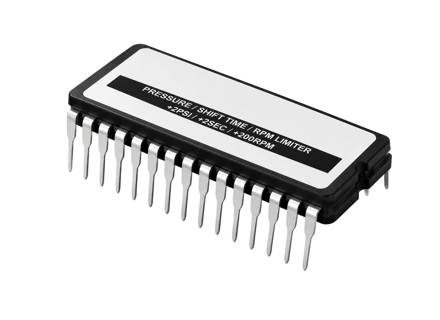
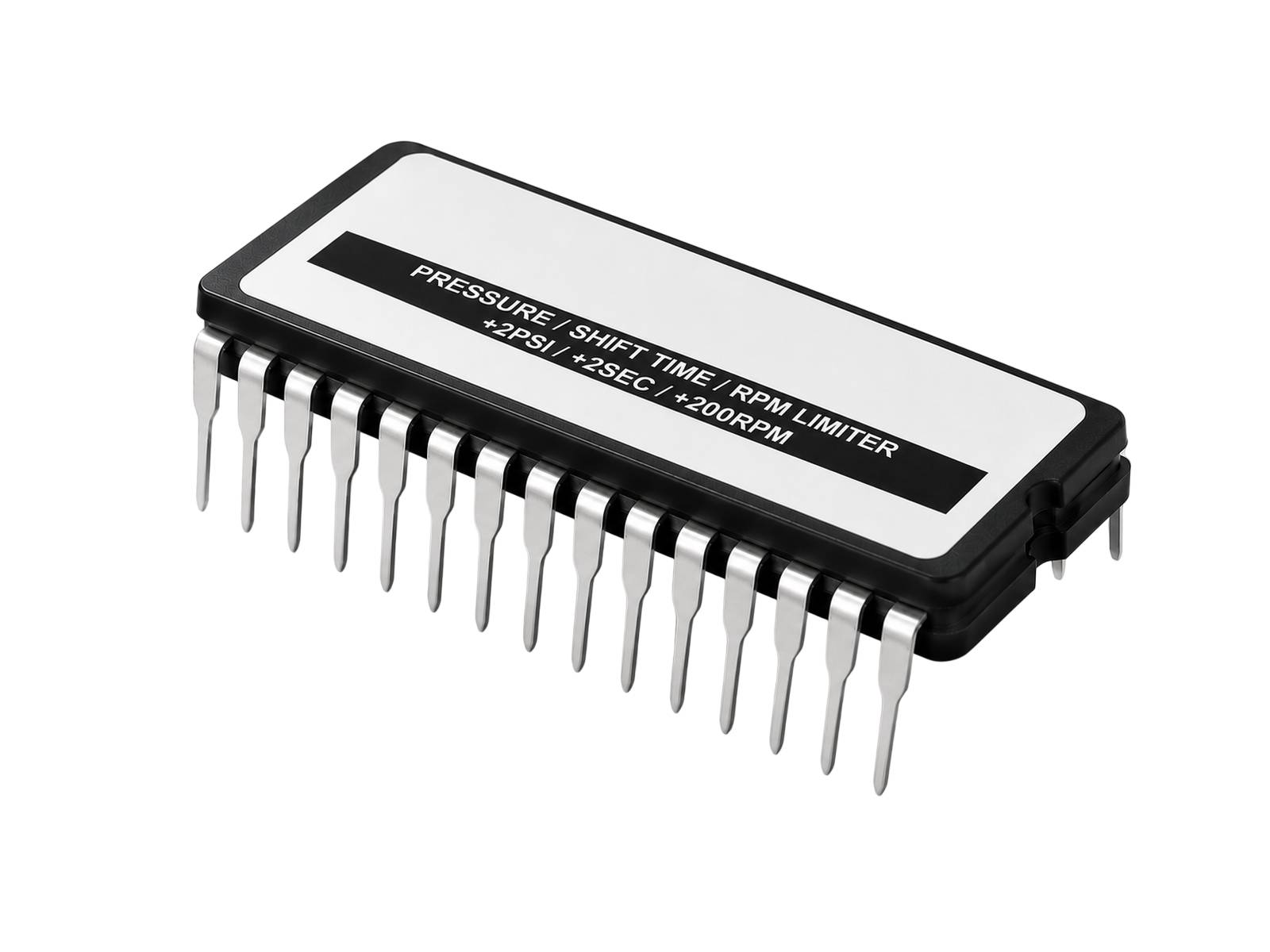
- Porsche 911 1987-1989 3.2L G50
OE Match Performance Upgrade Chip 28-Pin - Euro Spec with SSI or Race/Performance Headers
Transform the performance, throttle response and everyday drivability of your 1987-1989 Euro specification Porsche 911 Carrera 3.2 with this OE Match 28-pin Performance Upgrade Chip, developed specifically for cars fitted with SSI heat exchangers or race/performance headers.
Fits:
- Porsche 911 1987-1989 3.2L G50
This dedicated Bosch Motronic DME calibration is designed to complement the improved exhaust flow created by SSI systems, tubular manifolds and high-performance headers. Rather than relying on a generic one-size-fits-all programme, the software is matched to the engine specification, exhaust configuration and selected fuel grade.
The revised calibration delivers stronger low and mid-range torque, sharper throttle response, smoother idle quality and more usable power throughout the rev range. The familiar delay below 4,000rpm is substantially reduced, allowing the engine to respond from as low as approximately 1,500rpm and pull more strongly towards the rev limit.
For owners who have already invested in SSI heat exchangers or performance headers, this chip helps ensure the hardware upgrade is supported by appropriate ignition and fuel mapping.
1987 Model Owners – How Do I Know Whether I Have a 24-Pin
or 28-Pin Chip?
The 1987 model year was a transitional period during which
Porsche changed from a 24-pin EPROM to a 28-pin EPROM.
The vehicle model year alone is therefore not enough to
confirm which chip is fitted.
The only reliable way to identify the correct version is to
open the DME control unit and inspect the existing EPROM.
The original chip is typically:
- Black and rectangular
- Fitted with a factory matte foil sticker
- Marked with a sequence similar to 1267355xxx
Count the chip legs:
- 24 pins: order the 24-pin version
- 28 pins: this product is correct
Always confirm the pin count before ordering. Refer to the chip installation instructions for guidance on opening the DME, identifying the EPROM and safely installing the replacement chip.
Specifically Developed for 1987-1989 Euro 28-Pin DME Cars
This Performance Upgrade Chip is intended for:
- Porsche 911 Carrera 3.2 models from 1987 to 1989 Euro and Rest of World specification engines
- Bosch Motronic DME systems with a 28-pin EPROM
- SSI heat exchangers
- Race headers
- Performance exhaust manifolds
- Tubular exhaust headers
- Standard or performance rear silencers
- Standard or mildly modified engines
The default Euro/ROW calibration is programmed for 95 RON premium unleaded fuel.
A dedicated 98 RON programme is also available for owners who consistently use higher-octane fuel and want the fuel and ignition maps optimised accordingly.
What Does the Performance Upgrade Chip Do?
The chip replaces the original EPROM programme inside the Bosch Motronic DME and changes the engine-management calibration to better suit the improved airflow created by SSI or performance manifolds.
The revised software optimises:
- Ignition timing
- Full-throttle fuelling
- Part-throttle fuelling
- Low-rpm torque delivery
- Mid-range acceleration
- High-rpm power
- Throttle response
- Idle control
- Deceleration behaviour
- Exhaust-system compatibility
The original Porsche programme was developed around the factory exhaust system and conservative worldwide operating requirements. Once SSI heat exchangers or freer-flowing headers are fitted, the engine can move more air, but the standard software cannot fully optimise that increased flow.
This dedicated calibration helps provide the fuel and ignition strategy required to make better use of the exhaust upgrade.
Developed from the Ground Up
This is not simply a factory programme with a small number of values altered.
The software was developed through hundreds of hours of coding revisions, road testing and dynamometer evaluation on more than one hundred Porsche Carrera 3.2 models. This extensive development process identified areas of performance, responsiveness and efficiency that can remain restricted by the original calibration.
A wide range of programmes allows the chip to be matched to:
- Euro/ROW engine specification
- SSI or performance header configuration
- Rear silencer type
- Fuel octane
- Intake modifications
- Additional engine upgrades
- Owner preferences
This tailored approach helps deliver more appropriate fuelling and ignition control than a universal aftermarket chip.
Stronger Low and Mid-Range Torque
One of the most noticeable improvements is the increase in usable torque at low and medium engine speeds.
Power delivery begins from approximately 1,500rpm, reducing the delay commonly experienced below 4,000rpm. This makes the Carrera more responsive during normal road use while also improving corner-exit acceleration during fast-road, track and autocross driving.
Typical improvements include:
- Stronger acceleration from low rpm
- Greater mid-range pulling power
- Faster response to throttle inputs
- Reduced hesitation below 4,000rpm
- Improved overtaking performance
- Greater flexibility in higher gears
- Stronger acceleration out of corners
- More precise low-rpm throttle control
The broader torque delivery can make the car feel significantly lighter and more immediate without changing the essential character of the air-cooled flat-six.
Smoother Idle and Improved Drivability
The proprietary calibration also targets several common Carrera 3.2 drivability characteristics.
It can help reduce:
- Idle hunting
- Sub-idle rpm dipping during deceleration
- Hesitation when returning to idle
- Deceleration backfiring
- Uneven part-throttle response
- Low-speed flat spots
- Delayed response during acceleration
The result is a smoother transition between idle, part throttle and full load, making the engine more refined during everyday use and more predictable during performance driving.
Expected Performance Gains
Typical claimed improvements include:
- Approximately 6-8% increase in horsepower and torque throughout the powerband
- Around 12-16hp on otherwise standard engines
- Approximately 20 lb-ft of additional torque through areas of the rev range
- Around 10-20% improvement in part-throttle torque, horsepower and engine efficiency
- Stronger power delivery from approximately 1,500rpm to the rev limit
- Potentially greater gains on engines with SSI systems, performance headers, polished intake runners and other airflow upgrades
- Up to approximately 20hp on suitably modified engines
In some areas near the upper end of the rev range, particularly around 6,500rpm, gains may be considerably higher than the peak-to-peak figure because the revised calibration can reduce the power drop-off associated with the factory programme.
Actual results will vary according to engine condition, exhaust design, rear silencer, intake specification, fuel quality, ambient conditions and dynamometer method.
Why SSI and Performance Headers Need Matching Software
SSI heat exchangers and race/performance headers improve exhaust gas flow by reducing restriction and improving scavenging. However, the original Motronic DME remains calibrated for the factory exhaust system.
At full throttle, the DME operates primarily from pre-programmed ignition and fuel maps. It cannot automatically make full use of significant exhaust and induction modifications.
A matched performance chip helps by:
- Supporting increased exhaust flow
- Providing appropriate full-load fuelling
- Optimising ignition timing
- Improving throttle response
- Strengthening high-rpm power
- Increasing low and mid-range torque
- Reducing the restrictions of the factory calibration
- Maximising the benefit of SSI or performance header installation
Without corresponding software changes, the full performance value of upgraded manifolds may not be realised.
Potential Fuel Economy Improvement
Although this chip is primarily intended to improve performance, the revised part-throttle and ignition calibration may also increase cruising efficiency.
Many customers report highway fuel economy improvements of approximately 10-15%, depending on vehicle condition, fuel quality, driving style and operating conditions.
These figures are customer-reported and are not guaranteed, as fuel consumption will vary between vehicles and drivers.
Installation and Ordering Recommendations
Professional installation is recommended.
Before ordering, confirm:
- The vehicle is a 1987-1989 Euro/ROW Porsche 911 Carrera 3.2
- The DME uses a 28-pin EPROM
- The car is fitted with SSI heat exchangers or race/performance headers
- The rear silencer and induction setup are correctly specified
- The required programme is for 95 RON or 98 RON fuel
- Any additional engine modifications are declared