



Enter your VAT number here and click Verify:
Your details have been verified. VAT number registered to:
,
.
Your order will now be zero rated for VAT purposes. We reserve the right to verify these details after your order request has been made and reinstate VAT if required.
Your VAT details were not recognised or were invalid. Your VAT number must be matched to your Billing Country as specified above. This is currently specified as . You do not need to enter the country code part of your VAT number as this has already been selected in your billing address details above.
The VAT number checking service is currently offline. Please supply your VAT details within the comments or special instructions field below and we will apply a VAT discount after placing your order request.
Door Seals
By OE Match


- Porsche 911 1965-1968 2.0L / 912 SWB (F)
- Porsche 911 1968-1973 2.2L / 2.4L / 2.7L RS LWB (F)
- Porsche 911 1974-1977 2.7L / 1976-77 3.0 Carrera
- Porsche 911 1978-1983 3.0L / SC
- Porsche 911 1984-1986 3.2L
- Porsche 911 1987-1989 3.2L G50
- Porsche 911 1975-1977 3.0L Turbo (930)
- Porsche 911 1978-1989 3.3L Turbo (930)
- Porsche 964 (911) C2 1989-93
- Porsche 964 (911) C4 1989-93
- Porsche 964 (911) RS 3.6L 1991-93
- Porsche 964 (911) RS 3.8L 1991-93
- Porsche 964 (911) TURBO 3.3L 1991-93
- Porsche 964 (911) TURBO 3.6L 1991-93
- Porsche 993 (911) C2 1994-97
- Porsche 993 (911) C4 1994-97
- Porsche 993 (911) RS 1994-97
- Porsche 993 (911) C2S 1994-97
- Porsche 993 (911) C4S 1994-97
- Porsche 993 (911) TURBO 1994-96
- Porsche 993 (911) GT2 1994-97
- Porsche 993 (911) TURBO S 1994-97
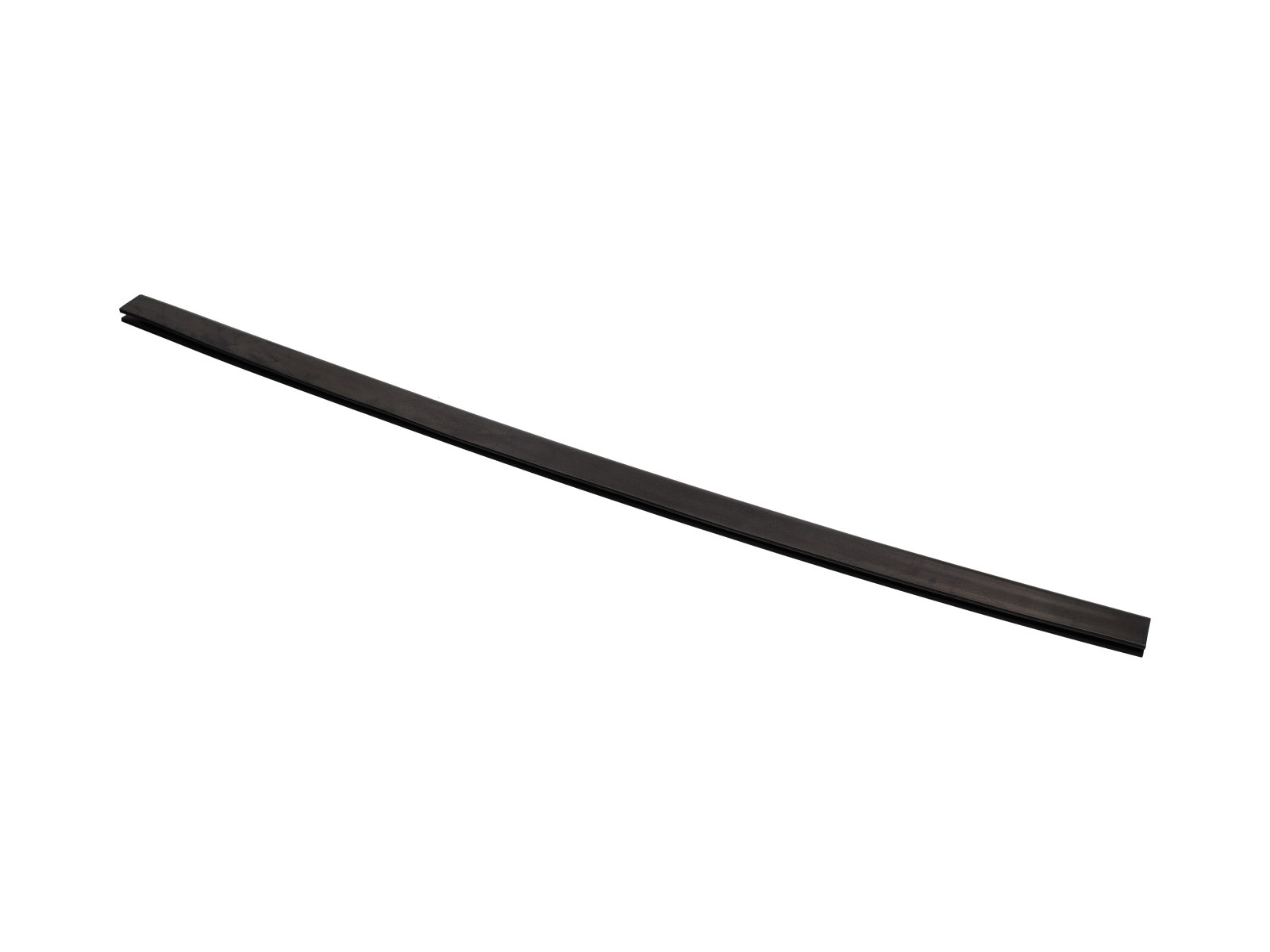
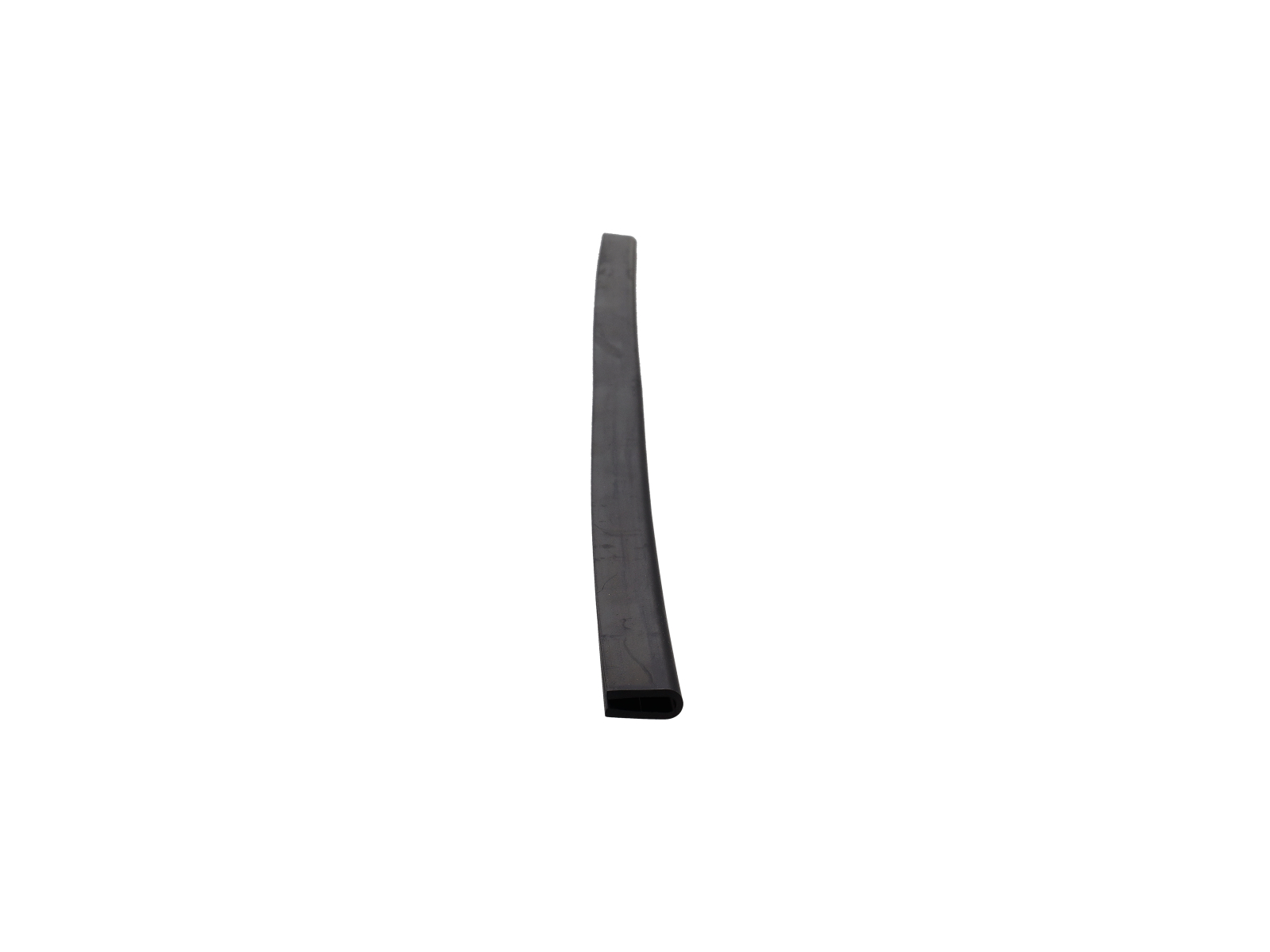
The window lift rail seal is an rubber strip designed to fit into the lower window lift rail, providing proper cushioning and grip for the door glass on Porsche 911, 964, and 993 Coupe models. It matches the original seal profile, hardness, and length to ensure smooth window operation and secure glass seating inside the lift channel.
Fits:
Porsche 911 1969 - 1989 ALL
Porsche 964 1989 - 1994 ALL
Porsche 993 1994 - 1998 Coupe
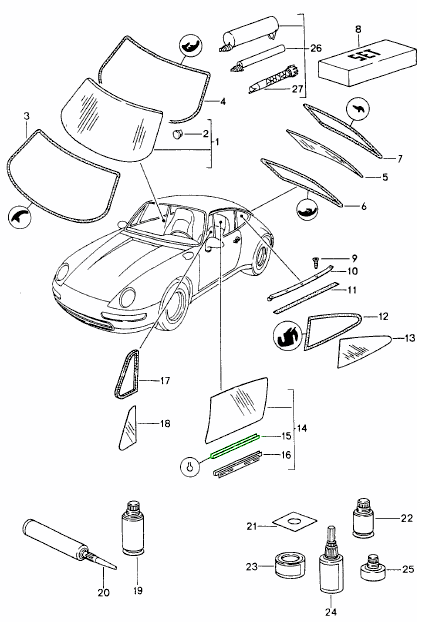
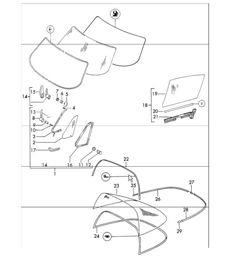
Diagram ref no 15.
The rubber sealing strip that sits inside the window lift rail (glass carrier channel). It grips the bottom edge of the door glass, ensuring the pane is securely held in place as the window regulator raises or lowers it.
This seal:
• Ensures the door glass is firmly clamped within the lift rail.
• Prevents rattling, vibration, or movement of the window during driving.
• Provides a cushioned interface between the metal rail and glass to prevent scratching or stress cracks.
• Helps maintain smooth and reliable window movement throughout the regulator’s travel.
Over time, the original window lift rail seal can harden, flatten, or crumble, causing the door glass to loosen inside the rail. This leads to rattling, uneven window movement, and even scratching or damage to the lower edge of the glass. Replacing the seal ensures the window is held firmly and quietly, restoring smooth operation and protecting both the regulator and the glass from premature wear.
Replace this seal if:
• The window moves inconsistently or tilts during operation.
• You hear rattling or vibration inside the door.
• The seal is visibly cracked, hardened, or missing sections.
• Glass shows scratches near the lower edge.
• You are replacing the regulator or restoring door internals.
Related reference numbers
Related, superseded, cross reference or alternative numbers for comparison.
91154249140
The product you are viewing cross references to these numbers

OEMatch Door Seals — Fit, Function, Confidence
Door seals preserve cabin comfort and protect interior trim by keeping out water, wind and dust while reducing wind noise and vibration. For Porsche models, correct sealing supports climate control, minimises corrosion risk and helps maintain the vehicle’s condition during restoration or regular ownership.
Available Types
- Door frame seals
- Door jamb and hinge seals
- Window run and channel seals
- Corner and flexible sealing sections
Understanding OEMatch Door Seals
OEM (Original Equipment Manufacturer) parts are made by the same company that produced your Porsche’s original door seals. OE (Original Equipment) refers to parts matching original specifications for the door seals and may be supplied by alternative manufacturers. Aftermarket parts offer alternative options, sometimes with enhanced features or better value. OEMatch supplies non-OEM door seals engineered as direct-fit alternatives to OEM parts, made to original-spec dimensions and tolerances for Porsche models.
OEMatch provides a wide selection of parts and sealing solutions for Porsche applications, with an extensive catalogue of part numbers and cross-references drawn from OE data. Products are offered for both classic and modern models and are developed to assist with restorations, maintenance and routine renewal of weatherseals.
Benefits Include
- Restores airtight and watertight sealing to prevent leaks and ingress
- Reduces wind noise and vibration for a quieter cabin
- Protects interior panels and trim from moisture-related damage
Why Door Seals Wear and Fail
- Exposure to UV and ozone causing cracking, hardening or shrinkage
- Loss of compression and elasticity through age and repeated use
- Contamination from dirt, oil or road debris and misaligned doors causing tearing
- Prolonged moisture retention leading to mould or corrosion around frames
The Importance of Replacing with OEMatch Door Seals
Replacing worn or damaged seals restores the vehicle’s weather protection and acoustic performance. Proper seals reduce the risk of water ingress and subsequent corrosion, help maintain interior condition and support effective heating and cooling. Selecting the right compound and profile for the model reduces repeat interventions and preserves value.
Advantages
- Available in EPDM and neoprene compounds chosen for flexibility and weather resistance
- Direct-fit replacements engineered to match original dimensions and tolerances
- Coverage for both classic restorations and modern Porsche models
Support & Advice
These items affect safety-critical systems. Installation should be carried out by a qualified technician following model-specific procedures and torque settings. Use calibrated tools and new fasteners where specified. Protect paintwork during removal and fitting, confirm correct alignment before trimming or bonding, and recheck fixings after initial use.