Your Porsche




Enter your VAT number here and click Verify:
Your details have been verified. VAT number registered to:
,
.
Your order will now be zero rated for VAT purposes. We reserve the right to verify these details after your order request has been made and reinstate VAT if required.
Your VAT details were not recognised or were invalid. Your VAT number must be matched to your Billing Country as specified above. This is currently specified as . You do not need to enter the country code part of your VAT number as this has already been selected in your billing address details above.
The VAT number checking service is currently offline. Please supply your VAT details within the comments or special instructions field below and we will apply a VAT discount after placing your order request.

- Porsche 911 1984-1986 3.2L
- Porsche 911 1987-1989 3.2L G50
- Porsche 911 1978-1989 3.3L Turbo (930)
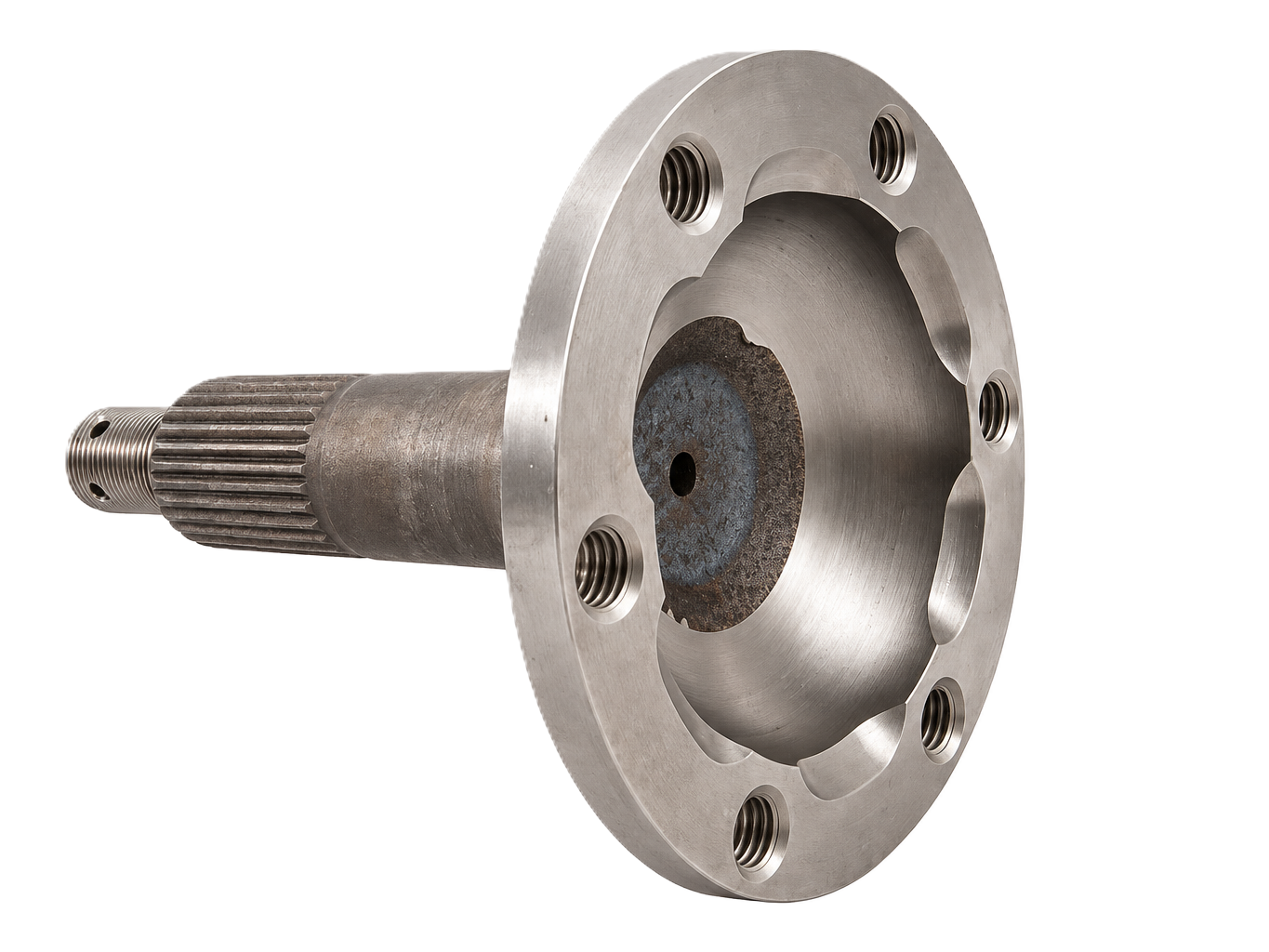
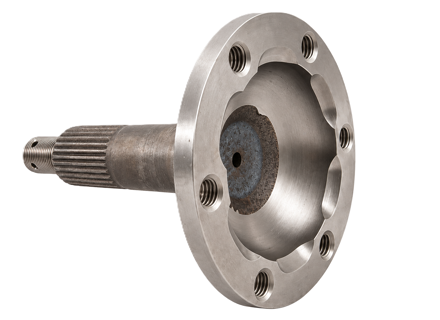
The OE MATCH Driveshaft Flange is a replacement drivetrain component associated with Porsche original equipment reference 93033223205, designed for selected classic Porsche 911 Turbo (930) and 911 Carrera Turbo Look (M491) models equipped with the corresponding manual gearbox and differential configuration.
Fits:- Porsche 911 Turbo 930.36/37 1984-88
- Porsche 911 Carrera M491 915.72/73 Turbo Look 1984-88
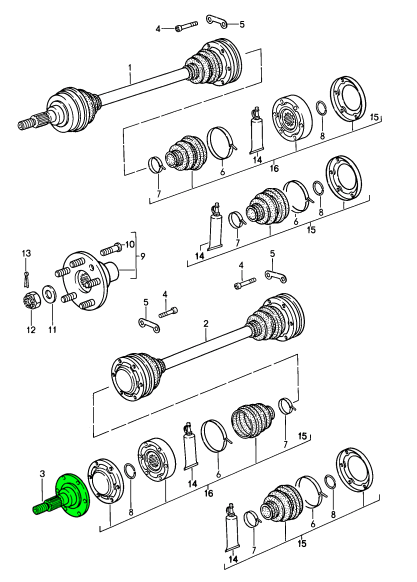
Diagram Ref No 3
The driveshaft flange forms part of the rear drivetrain assembly, providing the mechanical connection between the gearbox differential output and the inner constant velocity (CV) joint of the rear driveshaft.
Manufactured as an aftermarket alternative to the original Porsche component, the OE MATCH flange is intended to replace a worn or damaged output flange where the corresponding dimensions, spline arrangement and mounting specifications match the vehicle.
The Porsche 911 Turbo drivetrain is designed to transmit considerable engine torque to the rear wheels. During acceleration, deceleration and gear changes, the driveshaft flange experiences repeated rotational loading as power passes through the differential and driveshaft assembly.
A correctly fitted flange supports secure driveshaft attachment, accurate alignment and reliable transmission of rotational force.
Its mounting face must provide proper contact with the inner CV joint, while its differential engagement must remain secure under normal operating loads.
Over time, an original flange may become damaged through repeated torque loading, mechanical wear, corrosion, loose CV joint bolts or incorrect installation.
Worn splines, damaged mounting threads or distorted contact surfaces can compromise the connection between the gearbox and driveshaft, potentially causing vibration, knocking noises or excessive drivetrain movement.
Wear or damage around the output sealing surface may also contribute to gearbox oil leakage.
Replacing a defective driveshaft flange with a correctly matched OE MATCH component helps restore the intended mechanical connection, maintain reliable torque transmission and support the long-term operation of the drivetrain.
What This Product Does:
The driveshaft flange is fitted to the output side of the gearbox differential.
Its primary function is to connect the transmission output to the rear driveshaft, allowing engine torque to reach the driven wheels.
When the engine produces power, rotational force passes through the clutch, gearbox and differential.
The differential distributes this force through the output flanges to the rear driveshafts. Each driveshaft then transfers torque to its corresponding rear wheel.
The flange must maintain accurate engagement with the differential output and provide a secure mounting surface for the inner CV joint.
Its main functions include:
- Transmitting engine torque: Transfers rotational force from the gearbox differential to the rear driveshaft.
- Connecting the inner CV joint: Provides the mounting interface for the driveshaft's inner constant velocity joint.
- Supporting rear-wheel drive: Allows power from the transmission to reach the driven wheels.
- Maintaining drivetrain alignment: Supports the correct positioning of the driveshaft relative to the gearbox.
- Providing secure mechanical attachment: Allows the driveshaft joint to be fastened using the specified mounting hardware.
- Supporting smooth power delivery: Maintains a stable mechanical connection during acceleration and deceleration.
- Withstanding rotational loading: Operates under the repeated torsional forces generated during normal driving.
- Maintaining differential output engagement: Works with the gearbox output arrangement to transfer rotation.
- Supporting gearbox sealing: Provides a rotating surface associated with the differential output oil seal.
- Preserving original drivetrain geometry: Maintains the intended flange arrangement when matched to the correct transmission specification.
The driveshaft flange is a separate component from the complete driveshaft, CV joint, gearbox differential and rear wheel hub.
Symptoms Of Wear Or Failure:
Rear driveshaft flanges are generally durable components, but prolonged mechanical loading, incorrect installation or physical damage can affect their condition.
Common symptoms of a worn or damaged driveshaft flange include:
- Clunking during acceleration: Excessive movement at the flange or CV joint connection may produce knocking noises when torque is applied.
- Clunking during deceleration: Wear may become noticeable when the direction of drivetrain loading changes.
- Drivetrain vibration: A distorted or incorrectly centred flange may contribute to unwanted vibration during driving.
- Excessive rotational play: Damaged spline engagement or retaining components may allow movement between connected parts.
- Damaged splines: Worn or stripped splines may compromise the connection to the differential output.
- Loose CV joint mounting: Damaged mounting points or loose fasteners may prevent secure driveshaft attachment.
- Stripped mounting threads: Damaged bolt threads may make it difficult to fasten the CV joint correctly.
- Cracked or fractured flange: Excessive loading or impact damage may weaken the component.
- Corroded mounting surfaces: Corrosion may interfere with proper CV joint seating.
- Distorted flange face: Mechanical damage may prevent even contact between the flange and inner CV joint.
- Gearbox oil leakage: Damage to the flange's sealing surface may contribute to oil escaping around the differential output.
- Repeated loosening of driveshaft bolts: Worn mating surfaces or incorrect hardware may compromise bolt retention.
- Visible fretting marks: Abnormal movement can produce wear marks around the flange and CV joint mounting surfaces.
- Damaged retaining components: Defective retaining hardware may affect flange positioning or security.
- Unusual metallic drivetrain noises: Excessive play may produce knocking or rattling under load.
- Loss of drive: Severe damage or failure of the flange connection may interrupt torque transfer to the affected driveshaft.
Why Replacement Matters:
Replacing a damaged driveshaft flange is important for maintaining the secure connection between the gearbox differential and rear driveshaft.
A worn flange may allow excessive movement at the gearbox output, placing additional stress on the inner CV joint, driveshaft mounting bolts and associated components.
If the flange develops damaged splines, cracks or severely worn mounting surfaces, the drivetrain connection may no longer operate reliably.
Continued use of a damaged flange can accelerate wear in surrounding components and, in severe cases, lead to driveshaft connection failure or loss of drive.
Installing a correctly matched OE MATCH Driveshaft Flange helps to:
- Restore reliable torque transmission: Reinstate the intended connection between the gearbox differential and driveshaft.
- Maintain secure CV joint mounting: Replace damaged mounting surfaces and fastening points.
- Reduce excessive drivetrain play: Address unwanted movement caused by a confirmed worn flange.
- Improve drivetrain stability: Restore the correct flange position where wear or distortion has occurred.
- Reduce knocking and vibration: Help resolve symptoms caused by defective flange engagement.
- Protect surrounding drivetrain components: Reduce unnecessary stress on the CV joint and connecting hardware.
- Prevent further mounting damage: Replace worn threads and damaged mating surfaces before deterioration worsens.
- Support gearbox oil sealing: Restore the correct flange surface where damage is contributing to leakage.
- Maintain differential output engagement: Preserve secure mechanical contact with the transmission.
- Support gearbox rebuilding: Provide a replacement output component during transmission refurbishment.
- Maintain original drivetrain functionality: Restore the intended connection for the applicable gearbox configuration.
- Support classic Porsche restoration: Replace worn or damaged transmission components.
- Provide an OE MATCH replacement option: Offer an aftermarket alternative to the corresponding original Porsche component.
Replacement is particularly recommended when inspection confirms cracked material, damaged splines, excessive wear, distorted mounting surfaces or compromised retaining points.
When replacing the flange, the inner CV joint, output oil seal, retaining hardware and driveshaft should also be inspected.
Related reference numbers
Related, superseded, cross reference or alternative numbers for comparison.
93033223205
The product you are viewing cross references to these numbers