



Enter your VAT number here and click Verify:
Your details have been verified. VAT number registered to:
,
.
Your order will now be zero rated for VAT purposes. We reserve the right to verify these details after your order request has been made and reinstate VAT if required.
Your VAT details were not recognised or were invalid. Your VAT number must be matched to your Billing Country as specified above. This is currently specified as . You do not need to enter the country code part of your VAT number as this has already been selected in your billing address details above.
The VAT number checking service is currently offline. Please supply your VAT details within the comments or special instructions field below and we will apply a VAT discount after placing your order request.

- Porsche 996 TURBO 2000-05
- Porsche 996 GT2 2001-05
- Porsche 997 MK1 TURBO 2007-09
- Porsche 997 MK1 GT2 2007-09
- Porsche 997 MKII GT2 RS 2011-13
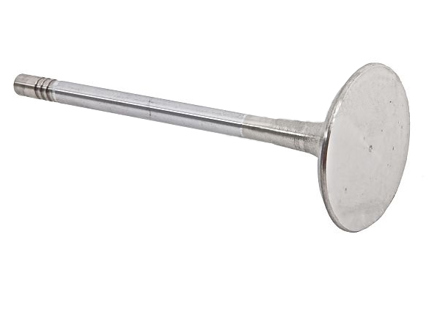
The OE Match Engine Cylinder Head Inlet Valve is a precision replacement valvetrain component designed for selected Porsche 996 Turbo, 996 GT2, 997 Turbo, 997 GT2 and GT2 RS 3.6L engines.
Fits:- Porsche 996 Turbo/GT2 2001-05
- Porsche 997.1 Turbo / GT2 3.6L 2007-09
- Porsche 997.2 GT2 RS 3.6L 2011
Diagram Ref No 2
The inlet valve controls the flow of the intake charge into the combustion chamber. During the intake stroke, it opens to allow the cylinder to fill before closing securely against the valve seat for the compression and combustion phases.
Correct valve condition, alignment and seating are essential for maintaining cylinder compression, efficient airflow and consistent engine performance. This is particularly important in high-performance turbocharged engines, where reliable cylinder sealing and airflow are critical under increased boost pressure and engine load.
What This Product Does:
- Controls the intake of air into the combustion chamber.
- Opens during the intake stroke to allow efficient cylinder filling.
- Closes against the valve seat to seal the combustion chamber.
- Helps maintain correct cylinder compression.
- Supports efficient combustion and engine breathing.
- Helps maintain throttle response and engine performance.
- Works with the valve guide, valve seat, valve spring and associated valvetrain components.
- Helps maintain reliable operation in high-performance turbocharged engines.
- Replaces an inlet valve that has become bent, pitted, burnt or excessively worn.
- Helps restore correct cylinder-head operation during engine repair or rebuilding.
For correct operation, the valve must move smoothly within its guide and form an even seal against the valve seat. Wear or damage that prevents complete seating can allow compression to escape and reduce engine efficiency.
Symptoms Of Wear Or Failure:
Possible symptoms include:
- Low or uneven cylinder compression.
- Engine misfires.
- Rough or unstable idle.
- Reduced engine power.
- Poor acceleration or throttle response.
- Difficulty starting.
- Increased fuel consumption.
- Uneven engine running.
- Check engine or engine-management warning light.
- Misfire-related fault codes.
- Ticking or abnormal valvetrain noise.
- Poor compression-test results.
- Leakage through the intake tract during a cylinder leak-down test.
- Pitting or erosion of the valve face.
- Carbon deposits around the valve.
- Bent or damaged valve stem.
- Excessive valve-stem wear.
- Failure of the valve to seal correctly against its seat.
A leaking inlet valve can allow cylinder pressure to escape back into the intake system rather than remaining within the combustion chamber.
Why Replacement Matters:
The inlet valve performs two essential functions: allowing the cylinder to fill efficiently and sealing the combustion chamber when closed.
During engine operation, the valve is exposed to continuous opening and closing cycles, high temperatures, combustion deposits and significant mechanical loading. In turbocharged engines, reliable valve sealing becomes particularly important because the engine operates under substantial cylinder pressures.
Over time, an inlet valve may suffer from:
- Valve-face pitting or erosion.
- Carbon build-up.
- Valve-stem wear.
- Mechanical distortion.
- Damage caused by poor seating.
- Wear associated with excessive valve-guide clearance.
- Damage caused by valve-to-piston contact.
A worn or damaged valve can lead to compression loss, misfires and reduced engine output.
Replacing a defective inlet valve helps restore:
- Correct cylinder sealing.
- Strong compression.
- Efficient intake airflow.
- Smooth engine operation.
- Consistent power delivery.
- Reliable turbocharged engine performance.
- Correct valvetrain operation.
Related reference numbers
Related, superseded, cross reference or alternative numbers for comparison.
99610511172
The product you are viewing cross references to these numbers


