



Enter your VAT number here and click Verify:
Your details have been verified. VAT number registered to:
,
.
Your order will now be zero rated for VAT purposes. We reserve the right to verify these details after your order request has been made and reinstate VAT if required.
Your VAT details were not recognised or were invalid. Your VAT number must be matched to your Billing Country as specified above. This is currently specified as . You do not need to enter the country code part of your VAT number as this has already been selected in your billing address details above.
The VAT number checking service is currently offline. Please supply your VAT details within the comments or special instructions field below and we will apply a VAT discount after placing your order request.
ABS | Speed Sensors
By OE Match


- Porsche 944 2.5L 8V 1982-87
- Porsche 944 2.7L 8V 1988-89
- Porsche 944S 2.5L 16V 1987-88
- Porsche 944S2 3.0L 16V 1989-91
- Porsche 944 Turbo 2.5L 8V 1985-88
- Porsche 944 Turbo 2.5L 8V 1989-91
- Porsche 944 Turbo S 2.5L 8V 1988
- Porsche 968 3.0L 1992-94
- Porsche 968 Sport 3.0L 1994-95
- Porsche 968 CS 3.0L 1993-95
- Porsche 968 Turbo S 3.0L 1993-94
- Porsche 928S2 4.7L 1984-86
- Porsche 928S4 5.0L 1987-92
- Porsche 928GT 5.0L 1989-91
- Porsche 928GTS 5.4L 1992-95
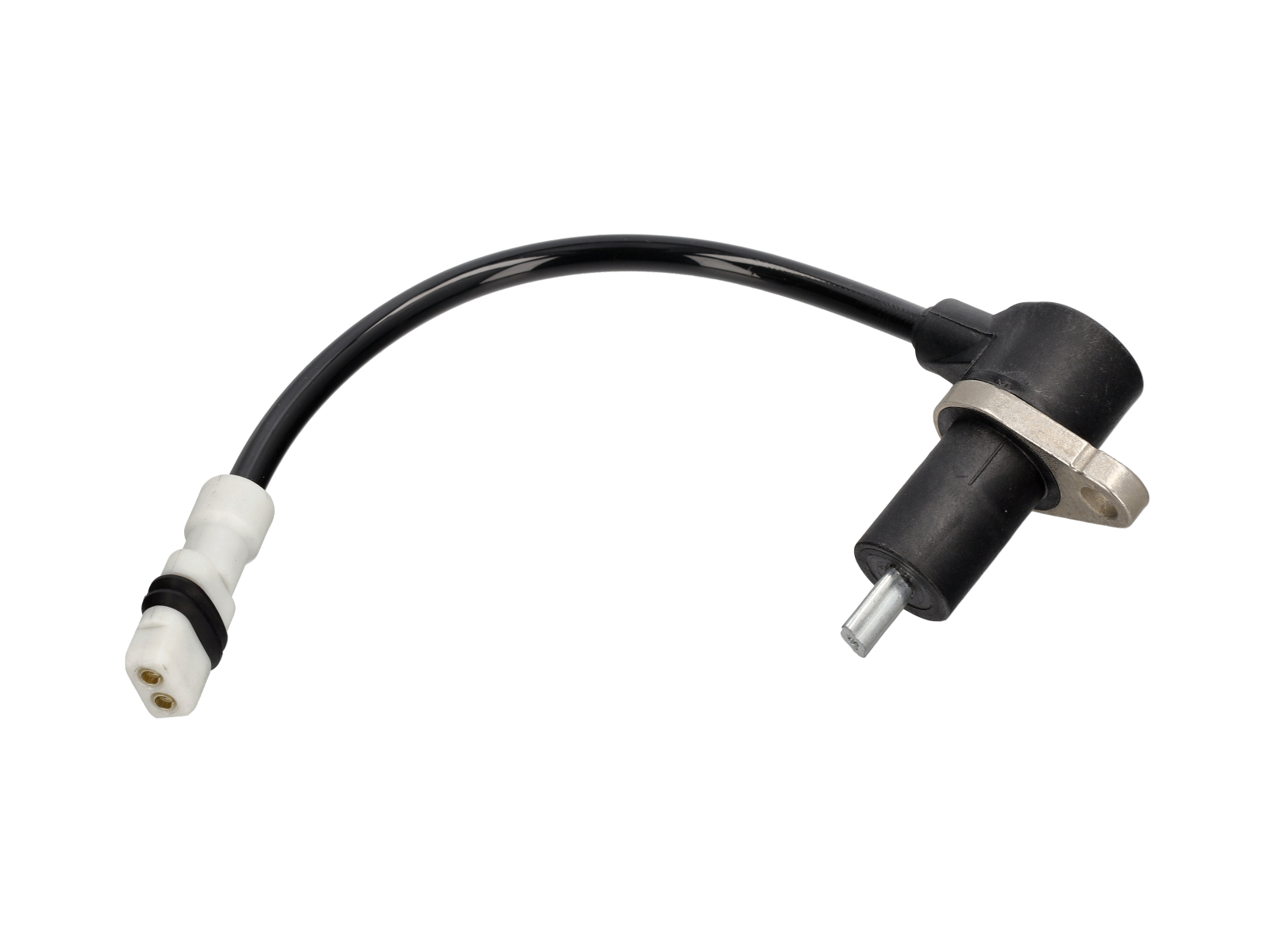
Porsche Front ABS Sensor
Sold each - 2 required per car (fits left or right)
The Front ABS Sensor is a critical safety
component fitted to selected Porsche 928, Porsche 944 and Porsche 968 models.
Designed to continuously monitor wheel speed, the ABS sensor sends real-time
data to the vehicle's Anti-Lock Braking System (ABS) control unit, allowing the
system to detect potential wheel lock-up during braking and respond
accordingly.
Fits:
- Porsche 944 2.5L 8V 1985-87
- Porsche 944 2.7L 8V 1988-89
- Porsche 944S 2.5L 16V 1987-88
- Porsche 944S2 3.0L 16V 1989-91
- Porsche 944 Turbo 2.5L 8V 1985-88
- Porsche 944 Turbo 2.5L 8V 1989-91
- Porsche 944 Turbo S 2.5L 8V 1988
- Porsche 968 3.0L 1992-94
- Porsche 968 Sport 3.0L 1994-95
- Porsche 968 CS 3.0L 1993-95
- Porsche 968 Turbo S 3.0L 1993-94
- Porsche 928S2 4.7L 1986
- Porsche 928S4 5.0L 1987-92
- Porsche 928GT 5.0L 1989-91
- Porsche 928GTS 5.4L 1992-95
By accurately measuring wheel rotation, the ABS sensor helps the braking system maintain steering control and vehicle stability during emergency braking situations. A correctly functioning ABS sensor is essential for ensuring the ABS system can operate effectively and deliver the safety performance Porsche originally engineered into the vehicle.
As these vehicles age, ABS sensors can become damaged by corrosion, contamination, wiring faults or general wear. Replacing a faulty sensor helps restore correct ABS functionality and improves overall braking system reliability.
What Does an ABS Sensor Do?
The ABS sensor, often referred to as a wheel speed sensor, monitors the rotational speed of each wheel and sends this information to the ABS control module.
During braking, the ABS system compares wheel speeds and detects if one wheel is slowing significantly faster than the others, indicating potential lock-up. The control unit then rapidly adjusts brake pressure to maintain traction and steering control.
A properly functioning ABS sensor helps provide:
Accurate wheel speed monitoring Effective anti-lock braking performance Improved vehicle stability under braking Enhanced steering control during emergency stops Reliable ABS system operation Increased driver confidence and safetySymptoms of ABS Sensor Wear or Failure
ABS sensors operate in harsh conditions and are exposed to moisture, road debris, vibration and temperature changes. Over time, they can become contaminated, damaged or electrically faulty.
Common symptoms of a failing ABS sensor include:
- ABS warning light illuminated Intermittent
- ABS fault warnings
- ABS system inoperative
- Fault codes stored in the ABS control unit
- Unexpected ABS activation at low speeds
- Loss of anti-lock braking functionality
Related reference numbers
Related, superseded, cross reference or alternative numbers for comparison.
92860640402
The product you are viewing cross references to these numbers
OEMatch ABS | Speed Sensors — Stopping Power, Consistent Control
OEMatch supplies ABS speed sensors for Porsche models, selected for repair, restoration and routine maintenance of wheel-speed detection systems. These sensors monitor wheel rotation to support ABS and traction control, and correct fitment helps ensure reliable signal transmission to the vehicle’s control modules.
Available Types
- Passive inductive wheel-speed sensors
- Active Hall-effect wheel-speed sensors
- Sensor rings and tone-wheel assemblies
Understanding OEMatch ABS | Speed Sensors
OEM (Original Equipment Manufacturer) parts are made by the same company that produced your Porsche’s original ABS speed sensors. OE (Original Equipment) refers to parts matching original specifications for the abs speed sensors and may be supplied by alternative manufacturers. Aftermarket parts offer alternative options, sometimes with enhanced features or better value. OEMatch supplies non-OEM abs speed sensors engineered as direct-fit alternatives to OEM parts, made to original-spec dimensions and tolerances for Porsche models. Wheel-speed sensors detect rotational speed at each wheel and send a signal to the ABS and stability control modules; their proximity to the hub exposes them to heat, moisture and road debris. OEMatch provides a wide selection of Porsche parts and catalogues many cross-referenced part numbers to support repairs and restorations.
Benefits Include
- Restores accurate wheel-speed data for ABS and traction systems
- Helps prevent erroneous warnings and reduces unwanted intervention
- Supports consistent braking behaviour and vehicle stability
Why ABS | Speed Sensors Wear and Fail
- Corrosion and contamination from salt, dirt or moisture impair sensor elements
- Physical damage from road debris or impact to the sensor or wiring
- Electrical faults such as connector corrosion, wiring fatigue or short circuits
The Importance of Replacing with OEMatch ABS | Speed Sensors
Replacing degraded sensors restores correct input to the vehicle control units and helps maintain the intended operation of ABS and stability systems. Correctly matched sensors reduce diagnostic uncertainty, protect braking performance and contribute to safer vehicle handling, particularly in low-grip conditions.
Advantages
- Made to original-spec dimensions for consistent fit and signal alignment
- Designed to resist heat and corrosion in wheel-end environments
- Compatible with factory wiring and control systems where specified
Support & Advice
These items affect safety-critical systems. Installation should be carried out by a qualified technician following model-specific procedures and torque settings. Use calibrated tools and new fasteners where specified and recheck fasteners after initial mileage.
-
 Brake Pads Packages
-
Brake Pads Standard
-
Brake Pad Wear Sensors
-
Brake Pad Anti-vibration shims
-
Standard Brake Hoses
-
Caliper and Brake Lines
-
Brake Calipers
-
Handbrake Shoes
-
Handbrake Cables
-
Caliper Seals |Pistons
-
Brake Servo | Booster
-
Brake Master Cylinder
-
Brake Fluid Reservoir
-
Brake Fluid
-
DesignTek Brake Kits