



Enter your VAT number here and click Verify:
Your details have been verified. VAT number registered to:
,
.
Your order will now be zero rated for VAT purposes. We reserve the right to verify these details after your order request has been made and reinstate VAT if required.
Your VAT details were not recognised or were invalid. Your VAT number must be matched to your Billing Country as specified above. This is currently specified as . You do not need to enter the country code part of your VAT number as this has already been selected in your billing address details above.
The VAT number checking service is currently offline. Please supply your VAT details within the comments or special instructions field below and we will apply a VAT discount after placing your order request.



- Porsche 911 1975-1977 3.0L Turbo (930)
- Porsche 911 1978-1989 3.3L Turbo (930)
- Porsche 356 1950-55
- Porsche 356A 1955-59
- Porsche 356B 1959-63
- Porsche 914 (1970-1976)
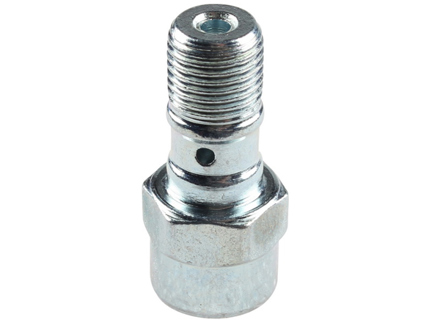
The OE Match Brake Line Banjo Bolt is a replacement hydraulic fitting used to secure a banjo-style brake line connection on selected classic Porsche models.
Fits:- Porsche 356 /A/B 1.1-1.6 01/50-12/63
- Porsche 911 Turbo 3.0-3.3 01/75-07/89
- Porsche 914 1.7-2.0 01/69-02/76
Diagram Ref No 16
Unlike a conventional solid bolt, a brake banjo bolt incorporates an internal fluid passage. When installed through the brake-line banjo fitting, it both secures the connection mechanically and allows pressurised brake fluid to flow through the joint.
Because the component forms part of the hydraulic braking circuit, its threads, internal passages and sealing surfaces must remain in excellent condition. Corrosion, thread damage, blocked passages or damaged sealing surfaces can result in brake fluid leakage or unreliable hydraulic operation.
What This Product Does:
The banjo bolt performs two important functions within the braking system: it mechanically secures the banjo fitting and provides a passage for hydraulic brake fluid.
It is designed to:
- Secure the brake-line banjo fitting in position.
- Allow pressurised brake fluid to pass through the connection.
- Form part of a sealed hydraulic brake circuit.
- Maintain correct brake-fluid delivery to the connected component.
- Provide a secure connection under repeated braking pressure.
- Replace a corroded, damaged or unreliable original banjo bolt.
- Support correct restoration of the braking system.
- Help maintain leak-free operation when installed with the correct sealing components.
Symptoms Of Wear Or Failure:
A banjo bolt does not normally wear in the same way as a moving mechanical component, but age, corrosion, overtightening or repeated removal can damage it.
Possible signs that replacement is required include:
- Brake fluid seepage around the banjo connection.
- Wetness around the bolt or fitting.
- Falling brake fluid reservoir level.
- Soft or spongy brake pedal.
- Increased brake pedal travel.
- Visible corrosion on the bolt.
- Heavy rust or pitting.
- Damaged or stripped threads.
- Rounded or damaged bolt head.
- Damaged sealing faces.
- Bolt no longer tightening correctly.
- Cross-threading.
- Internal fluid passage becoming blocked by contamination.
- Evidence that the bolt has been overtightened.
- Brake fluid leakage appearing after the connection has been disturbed.
Any brake-fluid leak should be investigated immediately.
Why Replacement Matters:
The banjo bolt forms part of a safety-critical hydraulic circuit.
When the brake pedal is pressed, substantial hydraulic pressure is transmitted through the brake fluid. The banjo connection must remain securely fastened and completely sealed throughout this pressure cycle.
Replacing a damaged bolt helps restore:
- Reliable hydraulic sealing.
- Correct brake-fluid flow.
- Secure brake-line attachment.
- Consistent brake pressure.
- Correct pedal feel.
- Long-term braking-system reliability.
Related reference numbers
Related, superseded, cross reference or alternative numbers for comparison.
99913500202
The product you are viewing cross references to these numbers